
Let's play a game! What do these 3 scenarios have in common?
Liam feels ashamed of eating sugary breakfast every morning, always promising he'll "eat healthy" tomorrow.
Ava hits snooze, skips the gym, and regrets it when she finally gets up.
Jayden scrolls through his phone at night instead of reading his favorite book and feels guilty.
 Photo by Caleb Jones on Unsplash
In each case, discomfort arises from actions not aligning with values.
That feeling has a name: cognitive dissonance. It’s more common than you think...and you can overcome it! Let’s walk through a few simple steps to make better, more confident life decisions.
What is Cognitive Dissonance?
Cognitive dissonance happens when your actions don't match your beliefs, values, and thoughts.
That clash can bring up feelings of discomfort like guilt, regret, or embarrassment.
It shows up in everyday life with:
health concerns
financial decisions
environmental concerns
personal relationships
political and social behaviors
Check out the video below to learn a common example of cognitive dissonance:
There are many signs that you may be experiencing cognitive dissonance. Check out some common characteristics below.👇

Discomfort with decisions: experiencing anxiety or panic before making a choice.

Justifying your actions: convincing yourself your behavior is okay by creating reasons or excuses.

Feeling embarrassed: hiding your actions or keeping them a secret, feeling worried about what others might think of you.
Acting out of social pressure: doing something against your beliefs for a fear of missing out.

Guilt about the past: feeling shame over actions that clash with your personal values.
Confusion about next steps: not knowing how to act in situations where your values and expected actions aren't aligned.
Did you know?
The "Why" Behind Cognitive Dissonance
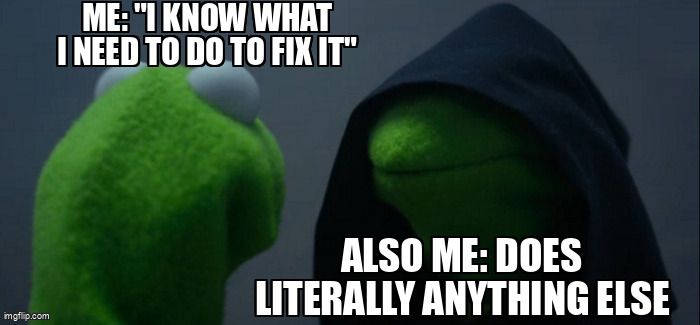
Why do we sometimes act against what we know is best? You know you should eat healthy or study for that math test — but sometimes, you don’t. Where is the disconnect?
Cognitive dissonance can occur in several situations, including:

Decision-making
After making tough or high-stakes decisions, it's common for people to second-guess themselves.
Example: Choosing between a higher salary vs. a values-aligned job.
Social Pressure
We want to fit in with others. Acting against the group, despite our own beliefs, is challenging.
Example: Feeling guilty after deciding to binge drink with your friends.
New Information
Learning new facts after acting can make us regret our past choices.
Example: Learning about carbon pollution may make you feel guilty about buying a non–fuel-efficient car in the past.

Forced Compliance
External factors (e.g., money, rules, norms) can push us to act against our beliefs.
Example: You tell a customer a product is great because your boss tells you to, even though you don't believe it.
Inner Alignment 101
Cognitive dissonance can keep us stuck in discomfort and lead to life decisions that don't align with our goals. Let's dive deeper with an example of how you can overcome the influence of cognitive dissonance.
Example: Landon's Splurge
Landon buys an expensive coffee every morning, even though he wants to save money, leaving him feeling guilty. He follows these simple steps to work through the cognitive dissonance he's feeling.
 1. Develop Self-Awareness
Landon catches himself thinking, "At least I don't buy lunch every day," and blames his roommate for not cleaning the coffee machine. With some intentional reflection, he spots his thought patterns: he's rationalizing his decision to help himself feel better.
How you can do it: Self-awareness isn’t only about catching rationalizations. It’s about noticing signs that your actions and values may not align — like stress, defensiveness, or avoidance. Keep in mind: not all dissonance needs to be “fixed”. Sometimes, you’re choosing between competing values (e.g., passion vs. financial stability), and that’s okay.
Notice discomfort: Pay attention to moments that feel off (tension, guilt, frustration).
Spot the values in conflict: Ask, “What am I balancing here?”
Observe your reactions: Are you justifying, avoiding, or reframing?
Name it neutrally: “This discomfort comes from competing values or actions.”
Stay curious: “Is this something I want to change, or a tradeoff I accept?”
 2. Practice Mindfulness
Landon journals about his daily coffee habit and notices the guilt he feels. He identifies the mismatch between his action (buying coffee) and value (saving money).
How you can do it: Pay attention to your thoughts, emotions, and physical sensations.
Meditation can help you recall a moment of misalignment and observe your feelings.
Journaling can help you process situations and feelings, and spot thought patterns.
In either practice, reflect on your values and behaviors in that particular scenario.
 3. Set Goals
Landon sets a goal to make coffee at home on Mondays. As it becomes a habit, he transitions to doing this on Mondays and Fridays. Gradually, he moves towards visiting the coffeeshop only once a week.
How you can do it: Take one realistic step to close the gap between your behavior and values. Focus on progress, not perfection. Fully aligning your behaviors and values may take time! Set achievable goals that inch you closer to alignment.
Subscribe for more quick bites of learning delivered to your inbox.
Unsubscribe anytime. No spam. 🙂
Quiz: Trey's Dilemma
Ever since high school, Trey has been known as the life of the party. Now in his mid-20s, he feels drained after social events and no longer enjoys hanging out with his party friends. Still, he keeps saying yes to every invite because “that’s just who I am.”
 Photo by Aleksandr Popov on Unsplash
What can Trey do to overcome the influence of his cognitive dissonance? Select all that apply:
A. Force himself to attend fewer parties immediately.
B. Reflect on how his values and behaviors may no longer align.
C. Explore new friendships and hobbies.
D. Distracts himself so he doesn’t overthink it.
Quiz
What can Trey do to overcome the influence of his cognitive dissonance? Select all that apply:
Take Action
 Photo by Christopher Burns on Unsplash
Cognitive dissonance happens to ALL of us — it's part of the human experience! Remember to treat yourself with compassion as you work towards aligning your beliefs and actions. Follow these steps to get started now:
Your feedback matters to us.
This Byte helped me better understand the topic.