
Have you ever folded a piece of paper — just for fun?
Maybe it was a paper airplane that actually flew, or a little boat that floated for a few seconds before sinking!
 That moment when a sheet of paper transforms into a dynamic, three-dimensional object — that’s not just craft. That’s science happening in your hands!
 Photo by Joshua Dixon on Unsplash
Origami — from the Japanese words ori (folding) and kami (paper) — is one of the oldest art forms in the world.
But beneath its beautiful, precise folds lies something remarkable: a direct connection to science, technology, engineering, and mathematics (STEM).
 But how exactly does folding paper connect to each part of STEM? Let's find out!
Did you know?
STEM Connections in Origami
Most of us grew up thinking of origami as an art project — something pretty to look at, then set aside. But here’s what I wish someone had told me earlier: every fold you make is a STEM concept in action!
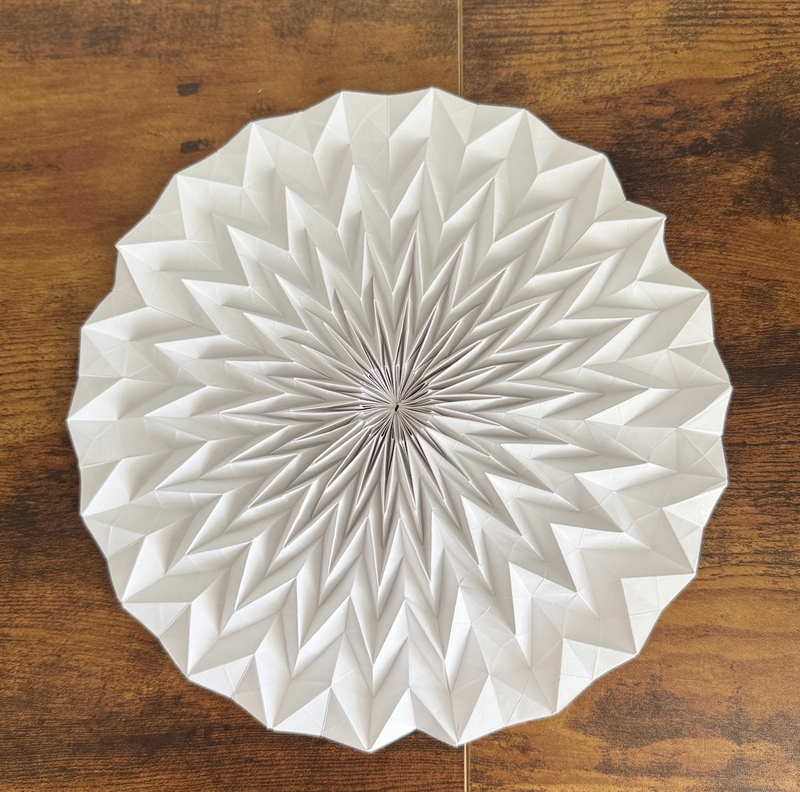 Original Photo by @whirly_gami
What makes it truly captivating is its inherent reliance on precision, patience, and logical sequencing — skills that quietly build along the way and carry over into every subject.
Here's how origami shows up across each part of STEM:
 Science in Origami
Fold a paper airplane, and you’re already doing science. Every crease affects how air moves around it — changing its speed, lift, and direction. That’s aerodynamics in action, not just a paper toy.
 Technology in Origami
Following origami steps is like reading a code. Each instruction is precise, sequential, and purposeful — just like an algorithm. Miss one step, and the whole structure changes. Sound familiar?
 Engineering in Origami
A single crease can make paper surprisingly strong. Origami teaches us about how structure and design affect stability — the same thinking behind bridges, buildings, and everyday objects.
 Mathematics in Origami
Every fold creates angles, fractions, and symmetry — without a single equation. Folding a square into halves, then quarters, is fractions made visible and tangible.
 From paper airplanes to deployable spacecraft components, origami principles have inspired real-world technological innovations.
Did you know?
STEM Thinking Through Origami
Engaging in origami STEM activities offers far more than a finished paper model. It’s a learning experience that nurtures your cognitive, physical, and creative growth.
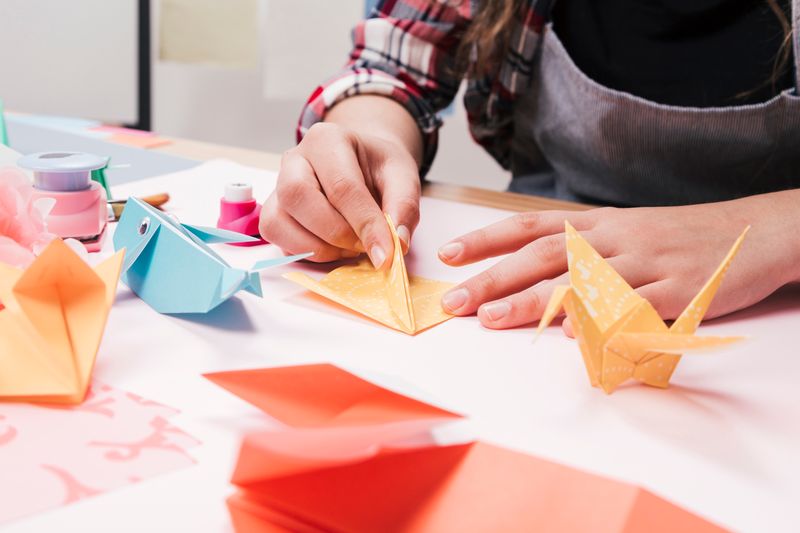 Image courtesy of Freepik
Fold by fold, here's how you'll improve STEM thinking by doing origami:

1. Fold & Coordinate
Every precise crease quietly builds the hand-eye coordination and fine motor control that engineers rely on when designing structures.
 2. Think & Solve
When a fold goes wrong, and you pause, analyze, and try again — that’s scientific thinking happening in real time.
 3. Rotate & Visualize
Origami trains your brain to mentally flip, rotate, and transform flat shapes into 3D objects — the same spatial thinking mathematicians, architects, and engineers use every day.
 4. Create & Imagine
Every structured fold still leaves room for your own choices — that blend of rules and creativity is exactly what designers call design thinking.
 5. Try & Achieve
Folding something wrong and pushing through anyway builds the same drive and persistence that drives every scientist and engineer forward.
 From sharpening focus to building spatial intelligence, origami quietly develops skills that show up across every stage of STEM learning.
Quiz
Which of these origami experiences directly builds mathematical thinking?
Getting Started With Origami STEM
Origami requires no fancy equipment. All it takes is paper, a flat surface, and a curious mind.
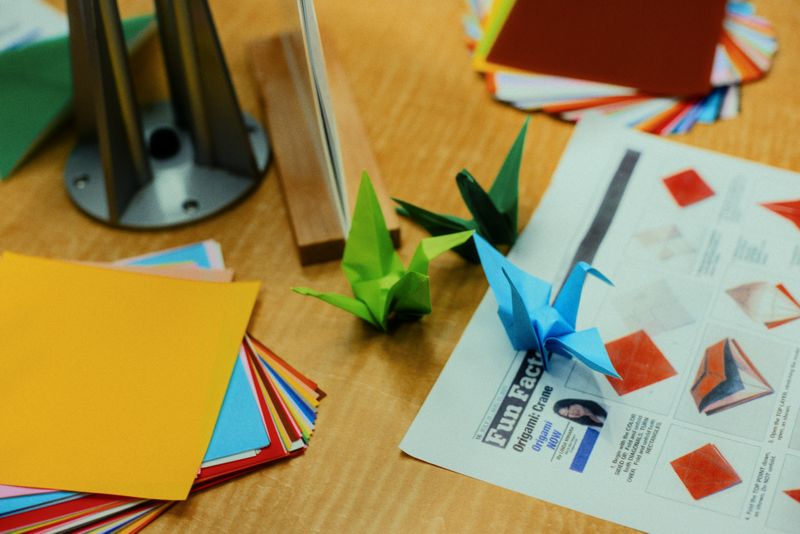 Photo by Jason Leung on Unsplash
Here are three things to set yourself up for a great origami STEM experience:
Start with the right paper. Use standard origami paper cut into a perfect square. That square itself is your first geometry lesson.
Follow each step. Every fold builds on the last, just like a coding algorithm. Skip one step and the whole structure changes.
Embrace the process. A wrong fold isn't a mistake — it's data. Observe it, adjust, and try again. That's exactly how scientists work. Real learning begins when you start experimenting.
Set up your space, bring your curiosity, and get started!

Try it: The Origami Jumping Frog! 🐸
The jumping frog isn't just a fun model — it's a mini STEM experiment in your hands.
Fold your origami frog with these instructions.
While you were folding, did you notice you were doing STEM?
Science connection: Press the frog's back and release. That's potential energy converting to kinetic energy in action.
Mathematics connection: Fold frogs of different sizes; each one jumps at a different distance. That's variables and measurement.
Engineering connection: Fold the base tight or loose. Watch how design affects performance.
Want to explore more? Try these next:
Fold a paper airplane and explore aerodynamics, force, and gravity.
Try this origami flower and find out more about petals, patterns, and geometry in nature.
Learn about modular origami and understand the interlocking patterns that build complex 3D architectural structures.
Did you know?
Subscribe for more quick bites of learning delivered to your inbox.
Unsubscribe anytime. No spam. 🙂
Quiz: Meet Aiden!
Aiden just finished folding his first jumping frog. It barely jumped. Instead of giving up, he tries folding the base tighter, then tests a smaller piece of paper. He carefully measures how far each frog jumps and keeps notes of every attempt.
Quiz
Which STEM skill do you think Aiden is demonstrating here?
Take Action
In origami, finishing a model doesn't mean the learning stops. Each fold you complete becomes a starting point for further inquiry, experimentation, and discovery.

Here’s where to start:
Your feedback matters to us.
This Byte helped me better understand the topic.