
There’s a whole world of growth out there!
But sometimes, you have to face feedback to get where you want to be.
Do you ever cringe when you know feedback is coming?
Click play on the video below to see how I used to react to feedback.
The author looks uncomfortable when receiving feedback. (All videos in this Byte were created by the author via Nano Banana, Seedance 2.0)
For a long time...
Even the word “feedback” made my stomach drop. It felt uncomfortable, unexpected, and honestly… not something I looked forward to.
Until...
I discovered the Truth, Relationship, Identity (TRI) framework — three triggers that made feedback really hard for me to control how I receive feedback.
Knowing them has changed everything so I can control how I receive feedback.
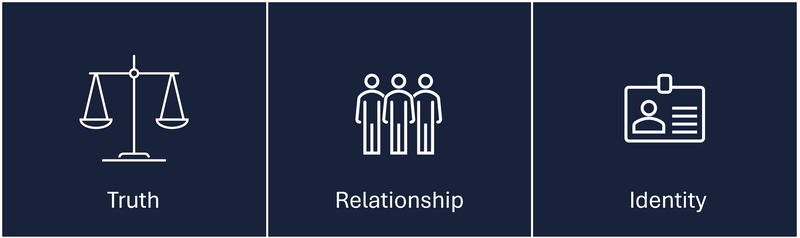 Image created by the author via Microsoft PowerPoint
Did you know?
1. Truth Trigger
Truth triggers happen when we perceive the feedback as inaccurate, unfair, or not constructive.
 My Story
Click play to see my truth trigger encounter when I gave a presentation and received feedback from my manager.
The author's manager says, "As your manager, you seem to be disengaged when presenting your presentation."
My Reaction
My first reaction was an “uh-oh” fear leading to defensiveness. I thought, "That's completely wrong. I poured my heart into this." I had worked late into the night rehearsing, so the feedback felt unfair and hard to accept.
 The Trigger Point
I experienced a classic truth trigger moment. The feedback felt wrong, so my instinct was to mentally dismiss it.
 My Trigger Shift
I paused and shifted from “That’s wrong” to curiosity. I asked questions like “Can you tell me more about what you saw?”
I separate facts from interpretations and remind myself that we all have blind spots — the things others can see about our behavior that we cannot see ourselves.
 Before you decide what to do with feedback, you must first understand it. Often, we misunderstand others because we’re listening for what’s wrong with their feedback. Shift from “that’s wrong” to “tell me more”. Understand why you see things differently.
 Truth Trigger Scenario
During a team meeting, a colleague says, “You tend to rush through details when you explain things.”
You feel that instant “That’s not true” reaction. What response shows you’re shifting from defensiveness to curiosity?
A. “Is this because you prefer more background? That feels like your personal style.”
B. “Can you share an example of when I rushed? I want to understand what you noticed.”
C. “I don’t think that’s fair. I’m usually the one giving the most detail.”
D. “Honestly, I think you’re judging me based on one moment.”
Quiz
Which scenario response shows you’re shifting from defensiveness to curiosity?
2. Relationship Trigger
Relationship triggers happen when we respond to who is giving the feedback, rather than what they’re actually saying.
 My Story
Click play to see my relationship trigger encounter when I was assigned to a team and received feedback from a team member.
A team member tells the author, "You need to be more collaborative when working on a team with me."
My Reaction
My first reaction was one of disbelief. I thought, 'Who are you to tell me that?' I listed her mistakes instead.
 The Trigger Point
This relationship trigger was activated because of who gave the feedback.
The message got lost in resentment and sidetrack arguments.
 My Trigger Shift
I needed to separate what from the who.
I asked myself, "Would I listen if a trusted mentor said this?"
This type of question separates the message from the person, bringing focus back to the actual content so we can evaluate the feedback more clearly and with less emotional charge.
 Feedback in relationships is rarely about you or me. It’s usually about you and me and our relationship system.
 Relationship Trigger Scenario
You share an idea in a meeting, and a colleague you don’t get along with says, “You didn’t think this through.” You instantly feel yourself reacting to them rather than the comment. What response shows you’re separating what was said from who said it?
A. “You always assume the worst about my work.”
B. “This feels personal. Why are you coming at me like this?”
C. “You’re not exactly perfect at planning either.”
D. “Can you tell me what part felt underdeveloped so I can take another look?”
Quiz
Which scenario response shows you’re separating what was said from who said it?
3. Identity Trigger
Identity is our sense of who we are, what we stand for, and what we can achieve. It’s central to our self-relationship. Identity triggers are activated when this sense of self feels threatened, causing us to feel unbalanced, overwhelmed, and defensive.
 My Story
Click play to see my identity trigger encounter when a friend at work gave me feedback about something I did that hurt our communication.
A work friend tells the author, "I must tell you that you interrupt when you are excited."
My Reaction
I spiraled: “I’m a terrible listener. Maybe I’m selfish.” I shut down.
 The Trigger Point
This identity trigger hit me because the feedback threatened my self-worth.
I felt emotionally flooded and blew it out of proportion.
 My Trigger Shift
I noticed that my emotions started to take over and paused before jumping to self-judgments. I recognized the feedback was one comment about one behavior and stayed in a learning mindset instead of making it bigger than what it was.
 You tell yourself stories to explain feedback — but your emotions often hijack them:
Past: When you feel lousy, you only remember all your past failures. When you feel good, you only recall your successes.
Present: You take one comment and turn it into “everything” about you. Happy? You brush it off. Down? You blow it way out of proportion.
Future: Feeling good? You assume things will keep getting better. Feeling bad? You’re sure it’ll end in disaster.
Spot these emotional distortions and you’ll handle feedback like a pro.
 Identity Trigger Scenario
Your coworker who shares a desk with you says, “Your side of the desk is always messy.”
You think: “I’m a terrible teammate.” You feel ashamed and avoid your coworker for the rest of the day.
What is the most helpful next step you can take in this moment?
A. Remind yourself that this is one comment about one behavior, and pause the self-judgment.
B. Defend yourself by listing all the times your deskmate left dishes in the kitchen sink.
C. Agree with them completely and decide you’re just bad at being an adult.
D. Change the subject and avoid talking about the desk again.
Quiz
Which scenario response is the most helpful next step you can take in this moment?
Subscribe for more quick bites of learning delivered to your inbox.
Unsubscribe anytime. No spam. 🙂
Take Action
Is feedback triggering your truth, relationship, or identity? Turn triggers into growth fuel with these quick moves:
Your feedback matters to us.
This Byte helped me better understand the topic.