
Imagine your teacher writes on the board:
Gravity is the natural force that governs the attraction between objects, directing them toward the center of the Earth.
Confusing, right?

Now, think about this:
You just won a lottery. 🎉 What would you do? You'd probably jump up, scream, and celebrate!

But, when you land back on the ground, have you ever thought,"Why don’t I just float off into space?"

That's because of gravity. Gravity pulls everything, including you, back toward the Earth.
 Take a moment and think:
Which way helped you understand gravity better: a definition on the board or the scenario you could relate to?
 Abstract concepts like gravity can be vague, complex, and hard to understand. Their definitions alone can be difficult to clarify.
 Relating these ideas to concrete examples can help you visualize and connect them to things you already know, making them easier to learn and remember.
How to Use Concrete Examples?
Concrete examples help you turn abstract ideas into something you can see, imagine, understand, and apply.
Connecting an idea to what you experience in daily life helps you understand it easily and recall it later. There are many ways to turn abstract ideas into real-life concrete examples.
1. Link new concepts to things you already know.
You can learn an algorithm by thinking of it as a recipe — a set of steps to follow.
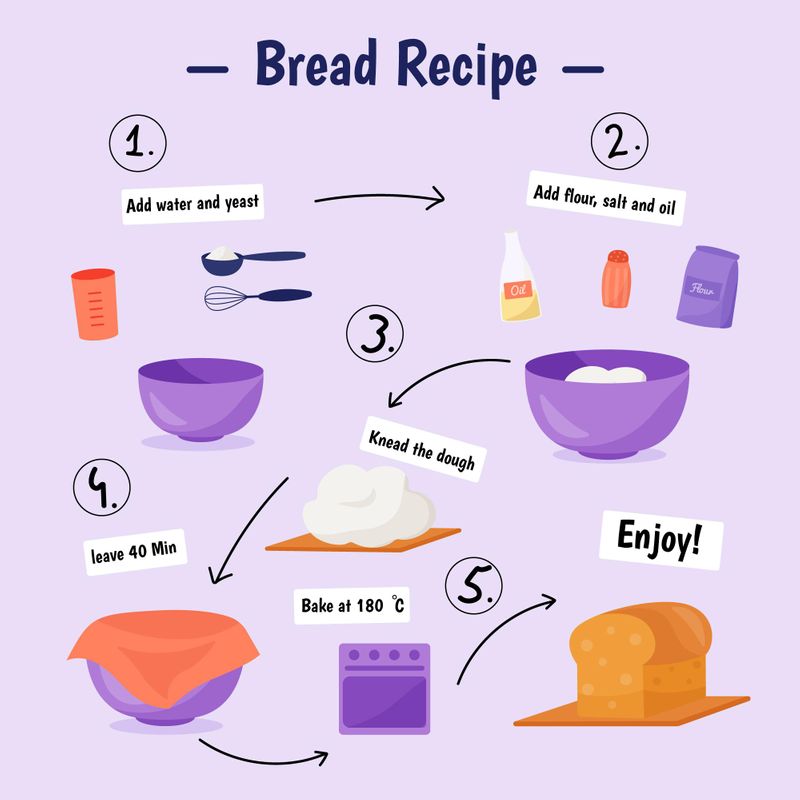 Image courtesy of Freepik
Connecting new ideas to familiar things helps you understand faster.
2. Use familiar situations from your daily life.
Learning fractions becomes easier when you think about sharing pizza slices with friends.
 Photo by Diana Krotova on Unsplash
Familiar situations make abstract concepts easier to imagine.
3. Observe where you see this concept in real life.
Understanding networks becomes easy by looking at your friends' group or social media connections.
 Image courtesy of Freepik
Quiz
Which of the following is a concrete example?
What Makes the Concept Visible?
Sometimes, concepts become clearer when you can see them, imagine them, or watch them in action. Relating what you’re studying to a vivid, real-life example can help the lesson stick better.
To make an idea more concrete, try these strategies.
1. Draw it.
Drawing a process into diagrams or sketches can help you see how it works.
For example, consider planning a business idea.
 Image courtesy of Freepik
Putting it into a sketch can help you see how different parts of the process are connected and how work flows through them.
2. Watch it.
Watching something in action through videos or animations can help you understand better.
Check out this video, where a teacher demonstrates how memory works in learning by recalling past experiences.
3. Imagine it.
Turning a concept into a story or scenario can make it easier to remember.
You can turn events from a history lesson into a story that relates to your present life, making them easier to follow and recall.

All these concrete examples help you connect ideas to real life and make them visible.
Did you know?
Make Your Own Concrete Examples
Now that you understand how concrete examples work, try building your own real-life scenarios to explain the concept.
Check out these tips to create a set of related examples to help your learning.
 1. Collect examples from class.
Write down examples or specific stories your teacher uses during lessons.
 2. Look for examples in your textbook or videos.
Many books, lecture slides, and classroom materials use additional case studies and examples to explain the concepts.
 3. Connect the concept to your own life.
Relate new topics to things you already understand well. Try explaining the example to a friend to see if it makes sense.
 4. Use multiple examples to relate the concept.
Don't rely on just one. Using several examples with different details related to the concept. Each time, ask yourself: "Do I really get this?" and tie it back to the idea.
 5. Check your examples for accuracy.
Remember, not all examples may be equally accurate and relevant, especially for new abstract concepts. Each time you create an example, verify it with an expert before relying on it.
Quiz
You're starting to learn about cost inflation. Which of these can help you understand the concept best? Select all that apply:
Subscribe for more quick bites of learning delivered to your inbox.
Unsubscribe anytime. No spam. 🙂
Take Action
Ready to nail down an abstract idea and make it concrete?

Try this the next time you learn something new:
Your feedback matters to us.
This Byte helped me better understand the topic.