
 Photo by Vitaly Gariev on Unsplash
Have you ever found yourself in a group project where one teammate did the whole thing alone, without telling anyone, while another wanted a group vote on every. single. decision?
A lot of it comes down to culture. Psychologist Geert Hofstede spent years studying how culture shapes the way people work — the so called Hofstede's cultural dimensions theory. He found one pattern that shows up everywhere: some cultures push people to back themselves, while others push people to put the group first.
Once you understand what's driving these differences in your workplace, you can stop taking them personally and start collaborating more smartly.
Hofstede's Cultural Dimensions: "I" vs "We" Scale
 Photo by Steve A Johnson on Unsplash
Think of culture like a software update for your brain. It shapes:
How you see the world.
What you value.
How you behave at work.
And not everyone is running the same version!
Hofstede studied workplaces in 50+ countries and found six key patterns that explain why people from different backgrounds often see and do things differently at work.
These patterns are known as Hofstede's cultural dimensions. One of the most powerful dimensions? The individualism-collectivism spectrum.

"I" Mode: Individualism
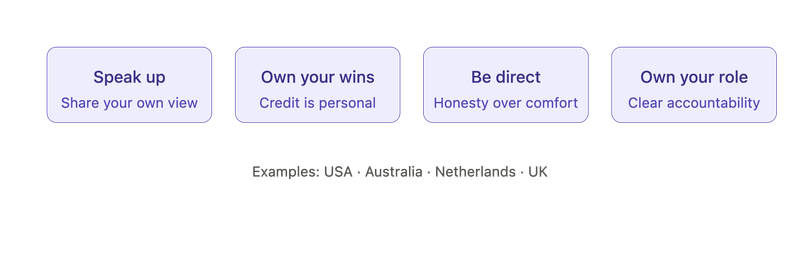
Personal goals come first. Stand out, speak up, and own your wins.
Concept: "What's best for me and my family?"
Examples: Netherlands, USA, Australia, UK, Germany

"We" Mode: Collectivism
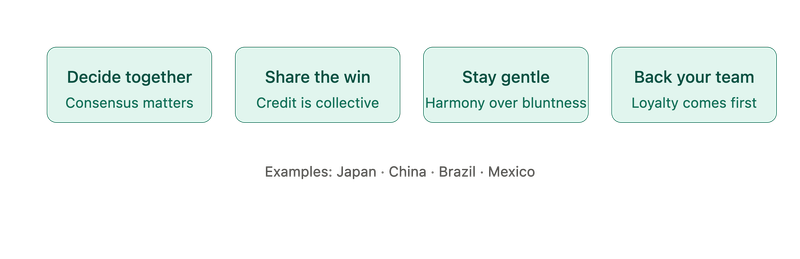
The group comes first. Fit in, decide together, share the credit.
Concept: "What's best for us and our group?"
Examples: Japan, India, China, Brazil, Mexico.
Individualism vs. Collectivism Worldwide
green = highly individualistic countries
red = highly collectivist countries
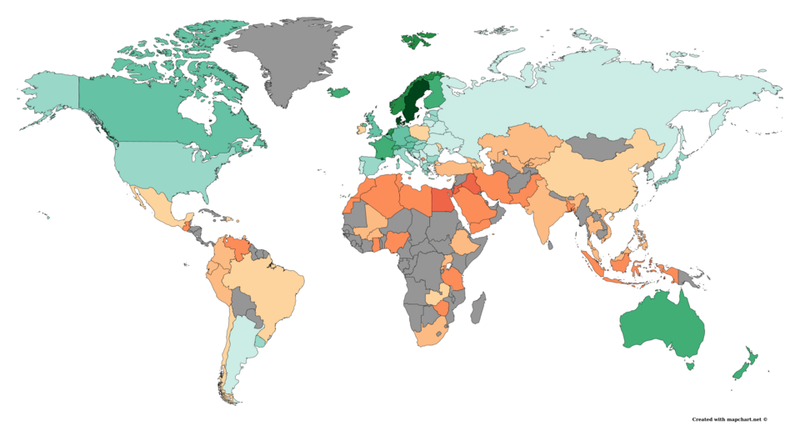 Image courtesy of TheCultureDemystifier via Creative Commons license
Every person has a mix of both. Sometimes you want to do things your way, sometimes you'd rather decide as a group. But cultures tend to lean one way or the other, and that shapes everything about how people work together.
Did you know?
"I've Got This": Individualism at Work
 Photo by Rupert Britton on Unsplash
In individualistic cultures, work is personal. Your ideas, your results, your reputation. You're expected to show up, stand out, and own it.
Here's what individualism looks like day-to-day at work:
You speak up in meetings, even if your opinion goes against the group.
You put your name on your work.
You expect feedback to be direct ("this needs work") rather than softened.
And if you do well, you want credit for it.
It's not arrogance. It's just the operating system.
An Example from Around the World 🇳🇱
In the Netherlands, one of the most individualistic countries in the world, it's completely normal to disagree with your boss in a meeting — out loud, in front of everyone — and nobody bats an eye.
What If Individualism Isn't Your Norm? 💡
In an individualistic workplace, staying quiet can work against you, even if silence feels respectful to you. Speaking up, sharing your ideas, and owning your achievements aren't seen as showing off. They're seen as being engaged. Make a simple shift:
Start small.
Share one idea in a meeting.
Put your name on your contributions.

Quiz: Lucas
You're in a team meeting in Amsterdam. Your manager proposes a new project direction. Lucas, who's from a collectivist culture, disagrees, but says nothing. He doesn't want to cause tension or disrespect his manager publicly.
What's the most likely effect in this individualistic workplace?
A. His manager sees him as polite and respectful.
B. His teammates think he's easy to work with.
C. He gets passed over for leadership opportunities because he seems disengaged.
D. He's seen as a team player and gets promoted.
Quiz
Choose the most likely effect:
"We've Got This": Collectivism at Work
 Photo by Stefan Pasch on Unsplash
In collectivist cultures, work is a team sport. It's all about your loyalty, your relationships, and your group's success. You're expected to fit in, support the team, and keep the peace.
Here's what collectivism looks like day-to-day at work:
Decisions take longer because everyone needs to be on board.
Feedback is gentle and given privately, not in front of the group.
Disagreeing with your manager in public? That's a hard no.
And when the team wins, everyone wins together.
It's not weakness. It's just a different operating system.
An Example From Around the World 🇰🇷
In South Korea, people don't say "my company" or "my school". They say "our company" and "our school", even when talking about themselves. That's collectivism baked right into the language.
What If Collectivism Isn't Your Norm? 💡
In a collectivist workplace, being too direct or going solo can land badly, even if you mean well. Jumping ahead without consulting the group, or giving blunt feedback in public, can seriously damage trust and relationships.
Make a simple shift:
Slow down before making big decisions.
Check in with teammates first.
And when giving feedback, find a private momen. It goes down much better.

Quiz: Maya
You're in a team meeting in Tokyo. Maya, who's from an individualistic culture, thinks her manager's idea won't work. She speaks up directly in the meeting: "I don't think this approach is right. Here's what I'd do instead."
What's the most likely effect in this collectivist workplace?
A. Her manager sees her as confident and promotes her.
B. Her teammates respect her for being honest.
C. She's seen as a strong leader who takes initiative.
D. She damages her relationship with her manager and loses the team's trust.
Quiz
Choose the most likely effect:
Subscribe for more quick bites of learning delivered to your inbox.
Unsubscribe anytime. No spam. 🙂
Same Meeting, Totally Different Reactions
Let's see how two colleagues in an multicultural workplace approach the same challenge.
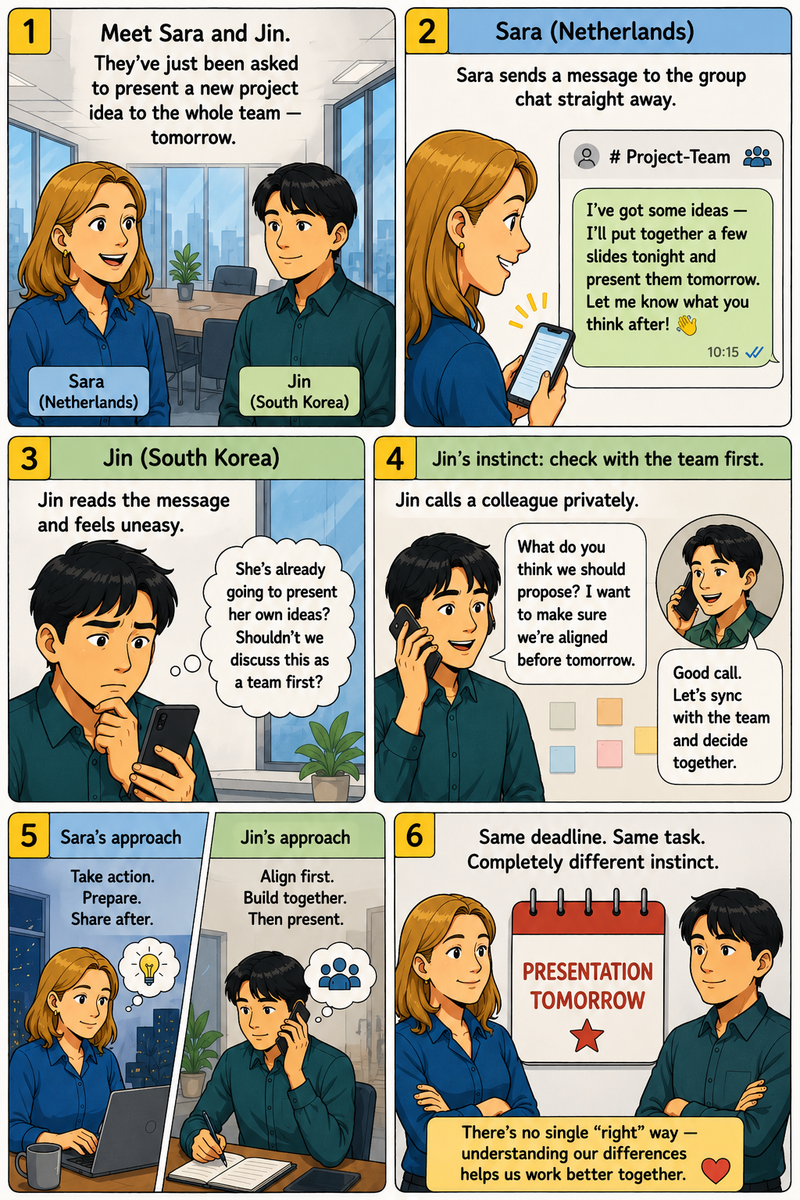 Image made by the author with ChatGPT. To hear an audio description of the image, click play on the audio player below:
The Takeaway
Sara's approach gets things moving fast, but Jin might feel excluded and disengaged.
Jin's approach builds stronger buy-in, but Sara might see it as slow or indecisive.
Neither is wrong. But without understanding each other's operating system, both risk losing the other's best contribution.
Read the room you're in. The dominant workplace culture sets the rules, and adapting to it keeps you in the game.

Quiz: What's the Right Move?
Imagine you're Sara and Jin's team lead.
It's the morning of the presentation. Jin stayed quiet in the group chat after Sara's message. Sara assumed he agreed with her approach and built the slides alone.
Jin arrives at the meeting feeling uncomfortable because nobody consulted him. Sara is confused: she shared her plan openly, so why didn't Jin just reply if he had other ideas?
The presentation doesn't go well. Afterwards, your manager asks you to help prevent this from happening again.
How could you best deal with the situation?
A. Tell Jin to speak up next time. If he has ideas, he should share them in the group chat like everyone else.
B. Suggest that the team set a short alignment call before big tasks, so everyone gets a chance to contribute in a way that works for them.
C. Tell Sara to slow down. She should have waited for the full team to agree before starting.
D. Let it go. Cultural differences are too complicated to manage in a work setting.
Quiz
Choose the best way to deal with the situation:
Take Action
 Photo by Vitaly Gariev on Unsplash
The real work starts now. Take what you learned about Hofstede's cultural dimensions into your actual workday.
Additional Resources
Check out these Bytes if you're:
Learn more about Hofstede's cultural dimensions:
What Is Individualism & Collectivism? (short articles)
Helpful Professor Explains: Collectivism vs Individualism (short video)
Did you know?
Your feedback matters to us.
This Byte helped me better understand the topic.