Have you ever tried to improve your career skills but struggled to reach your goals?
The challenge is often not effort, but structure. Many people try to reskill and upskill, but without a clear system, progress becomes inconsistent.
 This is where a habit loop comes in. It provides a simple structure your brain can follow repeatedly, helping you build, refine, and expand your career skills over time.
Using this cycle intentionally helps learning become more consistent and improvement easier to sustain.
To understand how this works, let’s break down what a habit loop actually is.
What is a Habit Loop?
 A habit loop is the cycle your brain uses to build habits automatically.
It has three parts:
Cue: the trigger that starts the behavior.
Example: Before every meeting, your calendar reminder prompts you to prepare.
 2. Routine: the action you take.
Example: You spend some minutes practicing how to clearly explain one idea or update.
Reward: the result that reinforces the behavior.
Example: You communicate more clearly and feel more confident speaking up.
Repeating this particular loop helps you build and strengthen your communication and presentation skills over time, and can also improve other career skills.
Quiz
You set a daily reminder to review your top tasks. After doing this consistently, you notice you feel more in control and less stressed. What part of the habit loop is feeling more in control and less stressed?
Did you know?
How to Use a Habit Loop for Career Skills

To apply it, build your habit loop step by step:
1. Identify a skill. Choose one skill to improve.
Example: Project management
Choose a cue. Decide what will trigger the habit.
Example: You're assigned a new task or project with deadlines.
Define the routine. Turn the skill into a repeatable action.
Example: You break the project into tasks, set timelines, and track progress regularly.
Add a reward. Reinforce the habit with small, immediate wins at each step.
Example:
After breaking tasks down → You feel clear on what to do next.
After setting timelines → You feel more in control of your workload.
After completing key milestones → You receive positive feedback or take a short break as a reward.
Reflect and adjust. Review what’s working and improve the loop over time.
Quiz
You’ve been consistently breaking tasks into smaller steps and setting timelines whenever a new project is assigned. However, you notice that some tasks still get delayed. What is the best next step to improve your habit loop?
Did you know?
You Can Start Without Waiting for a Cue from Work
 You don’t need to wait for a work-assigned cue before building a habit loop.
Habit loops can be triggered in two ways:
 1. Reactive: the loop is triggered by workflows, and it's not always within your control.
Example:
Cue: You’re assigned a project.
Routine: You plan and organize tasks.
Reward: Work runs smoothly.
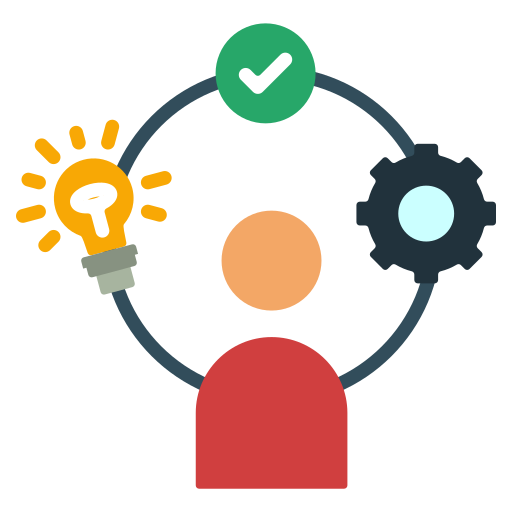 2. Proactive: you create the cue.
Example:
Cue: A self-set trigger (e.g., 9am daily, end of day, start of week).
Routine: You practice the skill (e.g., plan tasks, prioritize, review progress).
Reward: You feel more organized and see clear progress.
The most effective growth happens when you create your own cues and practice consistently, not just when work demands it.
Subscribe for more quick bites of learning delivered to your inbox.
Unsubscribe anytime. No spam. 🙂
Cues Can be Different
 Photo by Mohamed M on Unsplash
A cue isn't just one type of trigger. It can come from different parts of your daily life.
Here are common types of cues you can use:
Time-based cues: triggered by a specific time.
Example: 9am, end of day
Event-based cues: triggered by something that happens
Example: after a meeting, after receiving a task
Location-based cues: triggered by where you are
Example: when you sit at your workspace or in a quiet environment
Emotional cues: triggered by how you feel
Example: feeling happy, refreshed, stuck, or overwhelmed
Social cues: triggered by people or interactions
Example: when a manager or teammate engages you, or being around motivated colleagues
Preceding action (aka "habit stacking"): triggered by another habit
Example: After checking your email → you plan your top 3 tasks
The best cues are the ones that already happen regularly in your day — making your habits easier to repeat and sustain.
Quiz
You’ve tried setting reminders to plan your tasks, but you often ignore them. You decide to check your reminders after you send your morning emails. What type of cue are you using?
Did you know?
Why Habit Loops Work (and Where They Fall Short)
Each time you run the habit loop, you repeat the routine — and that repetition strengthens learning because of:

Neuroplasticity: your brain builds stronger pathways through repeated actions.
Example: The more you practice explaining ideas clearly, the easier it becomes to organize your thoughts during conversations.
Dopamine: this brain chemical reinforces the routine, making you more likely to repeat it.
Example: When someone understands your point and responds positively, you feel encouraged to keep communicating that way.

Automation: the routine becomes easier and more natural over time.
Example: You begin to naturally pause, structure your thoughts, and speak clearly without consciously thinking about it.
Not All Habits Become Skills
Repetition alone is not enough!
Progress stalls when:
There’s no feedback or reflection.
The task doesn’t get more challenging.
The habit becomes automatic but doesn't improve.
The reward is just completion, not growth.

So make sure to:
Add feedback after each attempt.
Increase difficulty gradually.
Focus on improvement, not just repetition.

Track progress visibly.
Quiz
To improve your communication skills, you've been practicing explaining ideas clearly to your coworkers. However, your colleagues are still having trouble understanding your message. What should you do next?
Did you know?
Take Action

Your feedback matters to us.
This Byte helped me better understand the topic.