
Are you globally focused, open minded, culturally curious, and a lifelong learner?
Have you ever wondered if you could be part of solving the international community's most ingrained challenges?
 AI image created on Canva
Has this curiosity led you to consider pursuing a degree in international relations but you're still unsure if it is the right decision?
Having a little more information will help you make your decision.
What Exactly Is International Relations?
International relations is the interdisciplinary study of how historical, political, legal, cultural, and economic forces influence relationships between nation-states.
Wow, that’s a lot!
In short, it's the study of the relationships between countries.

Areas of study that most international relations degrees explore are:
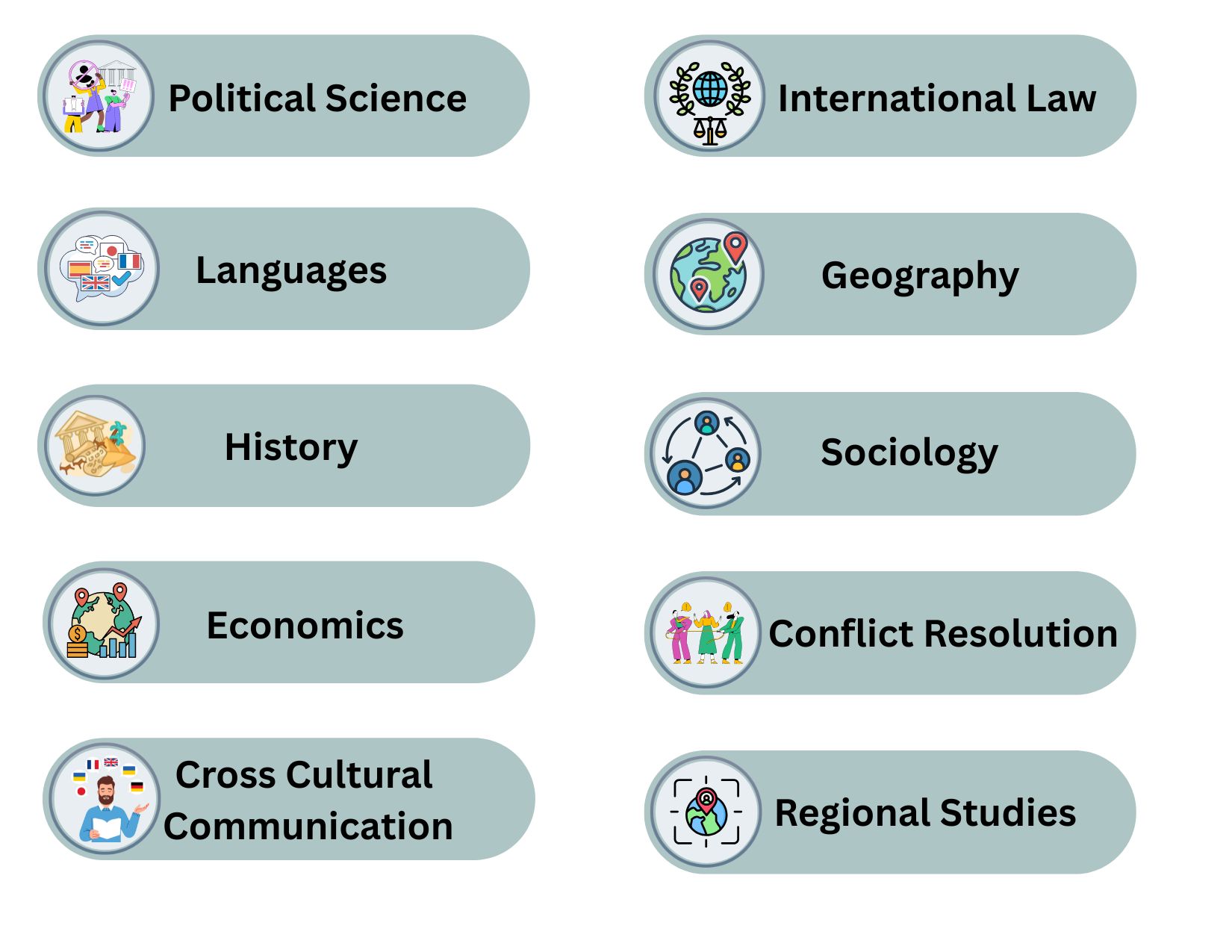 To hear an audio description of the image above, click the play button on the audio player below:
As you can see, it's a broad subject.
It’s all about building a solid foundation for understanding how the world connects.
Do you find any of these topics interesting? Then perhaps you're on the right path.
Did you know?
What To Expect

Once you step on the path of studying international relations, you'll find yourself participating in the time-honored tradition of having your mind expanded.
In lecture halls both large and small, you will explore the historic and current events that shape scholars of international relations.
And there will be A LOT of reading!
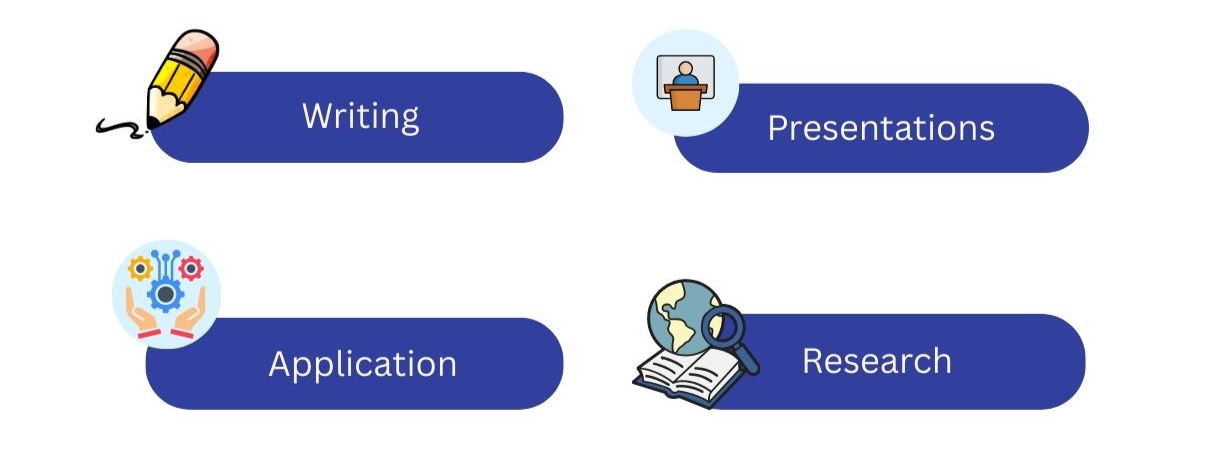
 While reading is a central part of any program, it's important for scholars to use the knowledge they gain in all those pages. This is done through a variety of task that fall into the following categories.
 The typical path for most international relations scholars starts with a Bachelor's degree. These degree programs come in a variety of names:
Global Studies
International Relations
International Studies
International Security and Conflict Resolution
Global Politics
To explore further, check out this Research.com article.
While a major in international relations provides a wide range of information, it can be beneficial to add a minor to refine your expertise and claim a niche.
This could include:
economics
communication
languages
international law
politics
development
environmental studies
conflict Studies
 Finally, growth in the international relations field is dependent on highly specialized skills. To give yourself a better chance at career advancement, it may be a good idea to pursue a Master's degree or PhD.
Preparation Is Key
I could give you a list of admission requirements, books to read, and thought leaders to follow to prepare you.
Instead, I want to help you create the right mindset for what’s ahead.
Step 1: Get Familiar with Bias
A bias is a "tendency, inclination, or prejudice toward or against something or someone."
There are two types of biases:
Explicit: these are biases that are expressed outwardly.
Implicit: hidden biases that inform decision-making.
To constructively interact with the global community, you have to understand the role bias plays in human decision-making.
Step 2: Go Get Uncomfortable
 Find a cultural event in your community, something you've never done before, and go — like a:
festival
cultural exchange
food event
religious service
Then write down the answers to the following questions.
What is something you learned?
What is something that made you uncomfortable? Why?
What is something that you found yourself judging?
What did you enjoy?
What do you want to know more about?
Experiences like these challenge biases and broaden your mindset.
Step 3: Stay Informed
 Staying informed helps you understand and respond to the challenges facing the global community.
Create a list of trusted resources that you regularly check.
Examples of this are:
Foreign affairs magazines
Global coalition websites like the European Union and African Union
News organizations in your own country and internationally
Nonprofit organizations focused on international affairs
Social media accounts of international policymakers
Quiz
Your community Instagram page mentions that there will be an international food festival in town this month. Even though you're not usually an adventurous eater, you go. This demonstrates which aspect of developing global mindedness?
Did you know?
Subscribe for more quick bites of learning delivered to your inbox.
Unsubscribe anytime. No spam. 🙂
Skills Needed
Along with building a global mindset and exploring a wide range of subjects, studying international relations helps you develop valuable skills.
creative problem solving
cross-cultural communication
research-driving analysis
negotiation
cultural awareness
leadership
historical understanding
conflict management
open-mindedness
policy evaluation
Can I Get a Job?
So after all that study, I know you're wondering, "What's next?"
The skills developed and mindset curated can lead to employment opportunities in a variety of fields.
Government
 Work with the foreign service, intelligence agencies as a policy expert, or for government aid agencies.
Military
 Military service is another way to use your international experience. International cooperation is a cornerstone of military operations.
 International Organizations
Organizations like the United Nations and the North Atlantic Treaty Organization rely on the expertise of international scholars to strengthen alliances, negotiate security operations, deliver aid, reduce conflict, and foster international cooperation.
 Non-Profit Organizations
There are millions of International non-profits around the globe focusing on issues such as refugee advocacy, development, economic insecurity, global health, conflict resolution and much more.
 Private Sector
The skills you develop are especially useful for businesses working on a global scale, where strong international negotiation is essential.
Understand the Risks
 There are a few risks to keep in mind before choosing this field.
Constantly learning about global challenges can be emotionally draining. At times it can feel like there’s no end to the world’s problems.
Career growth in international affairs is often slow and highly competitive, especially at higher levels, and many roles require advanced degrees.
Politics plays a major role, and political priorities can sometimes get in the way of best practices.
Global needs are always changing, so staying in this field means committing to lifelong learning.
Quiz: What's Your Motivation?
You find yourself at your school’s career fair. After considering a degree in international relations, you head over to speak with a representative from a school known for its strong program.
The representative asks why you're interested in studying international relations.
 Which of the following answers shows that you're prepared to pursue this path?
A. You recently read an article about a famine in Africa and want to help the starving children. You can't stand the suffering and feel that you can make a difference.
B. You've always longed to travel the world. You want to pursue a career that will allow you to travel. You imagine yourself sipping coffee, sitting by a river in Paris or on a boat in Amsterdam.
C. You're curious about the interactions between nations. You often seek out information about the deeper causes of conflict, famine, and global order, and you want to be part of developing solutions to complex issues among nations.
D. You believe you have what it takes to teach people from other nations how a well-functioning society operates, and you feel that if they understood your nation’s foundations, it could contribute to a better world.
Quiz
Choose the answer that best demonstrates that you are ready to pursue this as your chosen field of study:
Take Action
 With a better understanding of international relations, the skills you’ll gain, and the pros and cons, it’s time to get to work.
Your feedback matters to us.
This Byte helped me better understand the topic.
Recommended Bytes
No resources found!
We could not locate any resources for you.