
You’re in a meeting. A decision is made, and everyone nods along.
You nod too, even though a part of you disagrees.
The rest of the team moves on to the next topic, yet you're still thinking about how it didn't sit quite right with you.

That kind of mismatch between what you think and what you do is often described as cognitive dissonance. It’s uncomfortable, but it can also be useful.
Learning how to read that tension can help you make career choices that align more closely with what you want, leaving you feeling more assured.
What is Cognitive Dissonance?
Cognitive dissonance theory starts with the assumption that most of us want our beliefs and actions to be in alignment.

So when there’s a gap between what you think and what you actually do, it can create tension.
However, how much tension you feel depends on a few things:
Your tolerance for inconsistency. Some people can sit with mixed feelings more easily than others.
How big the mismatch is. A small difference might not register much, while a bigger one can feel difficult to ignore.
Your relationship to the other person. Dissonance can feel stronger when the situation involves someone you identify with or feel close to.
Your sense of responsibility. The discomfort can grow when you feel personally responsible for an outcome.
Why Cognitive Dissonance Matters in Your Career
Over time, the tension in your career associated with cognitive dissonance can take a toll..
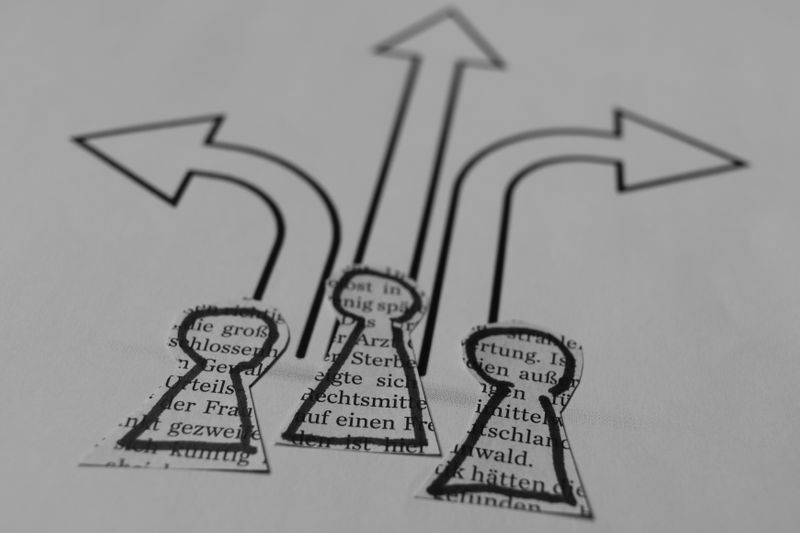
It helps to understand what the discomfort might be trying to tell you.
Not every uneasy moment at work is cognitive dissonance — sometimes it’s just a task you don’t really enjoy!
But when the feeling keeps returning or clashes with what matters to you, it’s often pointing to something deeper.
Quick Sense Check
 Which situation best reflects cognitive dissonance at work rather than general stress or uncertainty?
A. Feeling overwhelmed by your workload.
B. Feeling uneasy after agreeing to an unrealistic deadline.
C. Feeling bored in a meeting.
D. Feeling confused about a new process.
Quiz
Based on what you've just learned, which option fits best?
Subscribe for more quick bites of learning delivered to your inbox.
Unsubscribe anytime. No spam. 🙂
How People Respond to Cognitive Dissonance at Work
1. Change of Beliefs
People may change their beliefs so they no longer go against their actions.
Workplace example: Some people might question the task to find an approach that meshes better with their values.

2. Change in Behavior
People may change what they do so that their actions don't go against what they believe.
Workplace example: Some people may push through the discomfort created by a conflict between their personal beliefs and their job.
3. Reframing the Situation
People might use justification or rationalization to make the inconsistency feel smaller.
Workplace example: People might rationalize a choice by saying, “Everyone else agreed, so it must be fine,” or avoid the situation by putting the task off.
By reframing the outcome, you minimize the discomfort.
 Illustration created by author using Canva.
Did you know?
How Cognitive Dissonance Shows Up at Work
Cognitive dissonance at work often follows a simple pattern: belief to inner tension to contradictory behavior. Here’s how it can show up in different roles:
 Project Lead
Belief: "Starting early saves time.”
Inner tension: Anxiety about beginning a project, even though delaying it makes it worse.
Contradictory behaviour: Avoids starting and focuses on unrelated, smaller tasks.
 Team Member
Belief: “Downtime is important for health and performance.”
Inner tension: Stress from wanting rest, but also wanting to seem dependable.
Contradictory behaviour: Accepts extra tasks despite a high workload, sacrificing downtime.
 Manager
Belief: “Decisions should involve the team.”
Inner tension: Guilt, because acting alone clashes with their self-image, but involving everyone could slow things down.
Contradictory behaviour: Presents decisions as open for discussion even though they’re already made.
While these examples show clear moments of cognitive dissonance, not all discomfort works this way.
Sometimes the uneasy feeling is simply part of working through the uncertainty that comes with learning, growing, or stepping into a new responsibility.
The challenge is recognizing when your efforts to reduce that discomfort are keeping you in roles that don’t fit, or quietly holding you back from stepping into roles you’re actually ready to grow into.
How To Reduce Cognitive Dissonance When Making Career Decisions
Once you notice that uncomfortable mismatch, it can help to pause and look at what the discomfort is actually telling you.
Sometimes it’s just part of learning something new or settling into a role. Other times it’s a sign that the work clashes with what you value, or that the role isn’t lining up with the kind of work you thought you’d enjoy.

A slight change of behavior, like asking a question earlier, setting a clearer boundary, or checking expectations, can ease the tension in the moment.
But if the same feeling keeps showing up, it might be worth asking whether the role still fits how you like to work, or whether you’re ready for something with more room to grow.
You don’t need to make a big decision straight away. Just noticing the cognitive dissonance can help you make clearer choices about what’s right for you in your career.
 Work Example
Someone who always pictured themselves thriving in fast‑paced, high‑energy environment might be surprised to feel more comfortable in a role that’s structured and predictable, or vice versa. Noticing that tension can help them rethink what actually fits them, rather than what they assumed would.
Quiz
 Photo by Claudio Schwarz on Unsplash
A new member of a team believes asking questions helps them learn and do better work, but they often avoid asking because they worry it will make them look less competent, especially when tasked with independent work.
Afterwards, they feel uncomfortable because they know asking questions would have helped.
What would help them overcome this cognitive dissonance?
A. Build small check‑ins into their workflow so they can ask questions earlier, even if it feels a bit uncomfortable.
B. Ignore the discomfort and continue avoiding questions to protect their image.
C. Rely on others to notice when they’re unsure and offer help so they don’t have to initiate questions.
D. Convince themselves that asking questions isn’t actually that important because working independently is part of figuring things out, so the mismatch feels less uncomfortable.
Quiz
Which action would help them overcome this cognitive dissonance?
Take Action

Sometimes that wobbly, uneasy feeling that comes with cognitive dissonance is simply a cue to pause and get clear on what’s going on. A short moment of reflection won’t solve everything, but it can help you understand the situation before you react on autopilot.
Your feedback matters to us.
This Byte helped me better understand the topic.