
This logo isn't an ad or affiliate link. It's an organization that shares in our mission, and empowered the authors to share their insights in Byte form.
Rumie vets Bytes for compliance with our
Standards.
The organization is responsible for the completeness and reliability of the content.
Learn more
about how Rumie works with partners.
Imagine you're texting your punctually correct friend about your weekend plans, but your message is confusing:
You first type: "We can go to the mall: get a pizza, watch a movie, and buy new shoes."
Then, you type: "We can go to the mall; we could also get pizza; watch a movie; and buy new shoes."

I bet you're wondering which one makes more sense?
Well today, you'll master the colon (:) and semicolon (;) — two punctuation marks that look similar but play very different roles!
Colon vs. Semicolon: What’s the Difference?
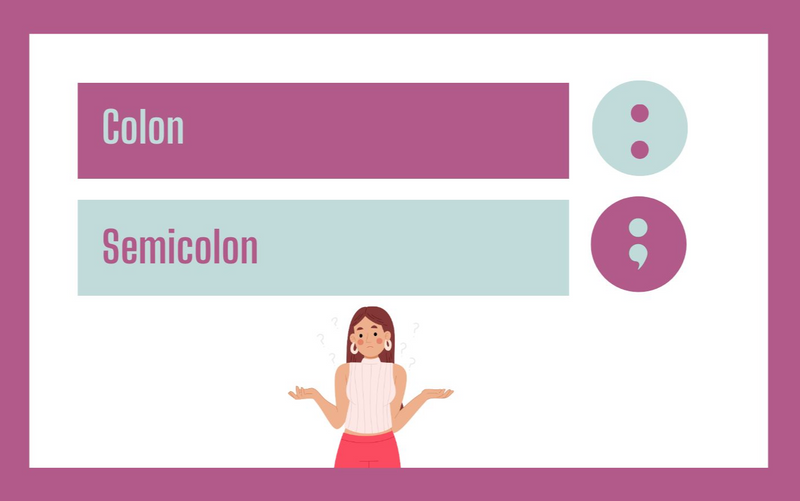 Image created by the author in Canva Creative Studio.
A colon (:) introduces information set up by the previous clause (a group of words with a subject & verb). It’s typically used before a list, example, or explanation.
A semicolon (;) joins related independent clauses together in the same sentence without a conjunction like "and" or "but".
Did you know?
You only need to capitalize the word after the semicolon if it's a proper noun or acronym.
Colon (:) — The Introducer
In a sentence, a colon is like a drumroll before something important. It introduces:
lists
explanations
big ideas
1. Introducing a list
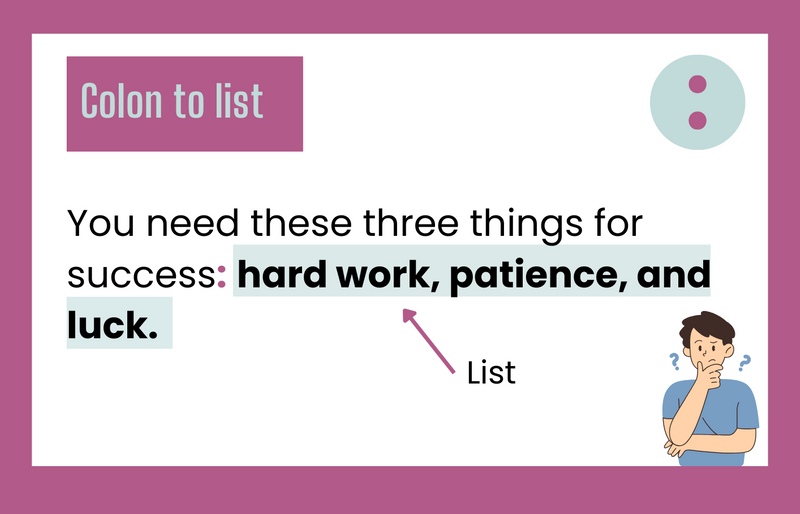 The infographics in this Byte were created by the author in Canva Creative Studio. To hear audio descriptions of each image, click play on the audio player below.
Notice that the colon introduces a list of three things needed for success.
2. Introducing an explanation or definition
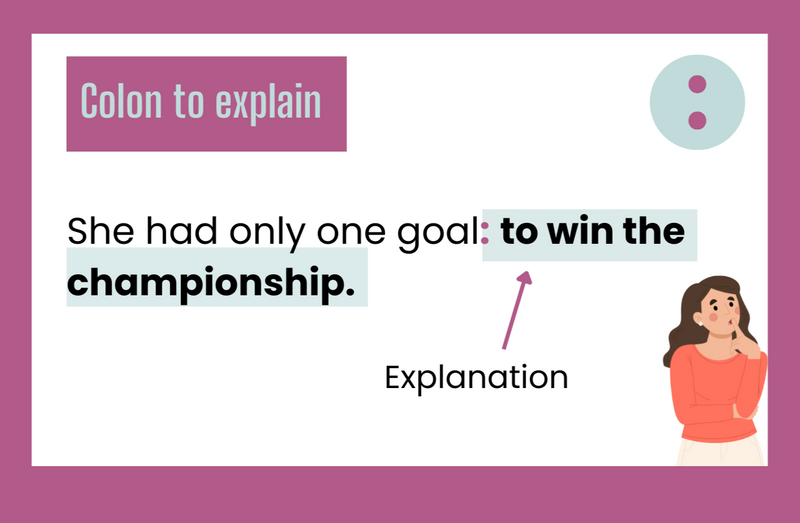
Notice that the colon introduces an explanation of what the goal is.
3. Emphasizing an important idea
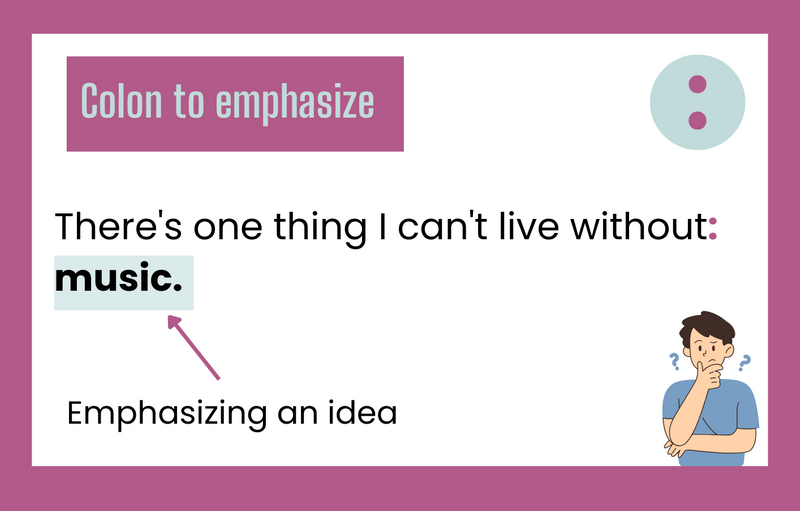
Notice that the colon emphasizes an important point or idea at the end of the sentence.
Semicolon (;) — The Connector
In a sentence, a semicolon is like a strong handshake between two related independent clauses in a single sentence when:
discussing the same topic
contrasting two similar ideas
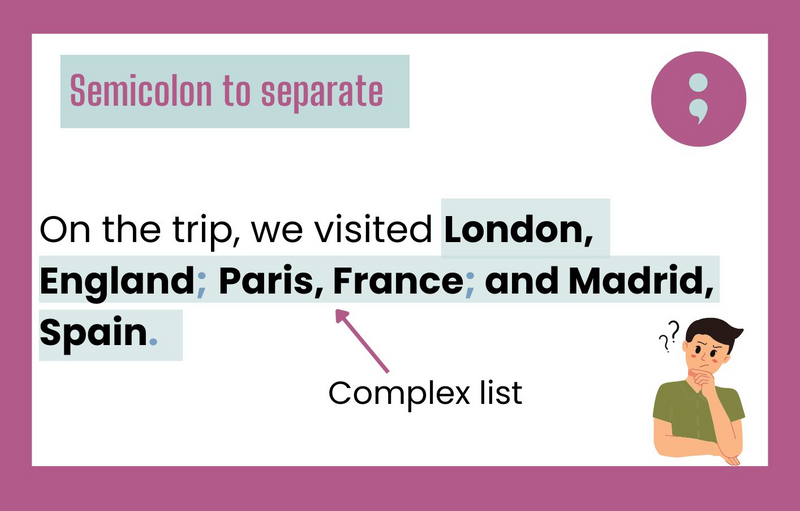
separating items in a list
1. To link two closely related independent clauses
Take a look at the example below:
I wanted to stay up late; I had an early meeting in the morning.
The semicolon connects two complete sentences that are closely related but could stand alone. Instead of using "but," the semicolon smoothly links them.
Watch the video below to learn how to link together two closely related ideas that can work by themselves as sentences:
2. Before a transitional phrase or conjunctive adverb that joins two clauses
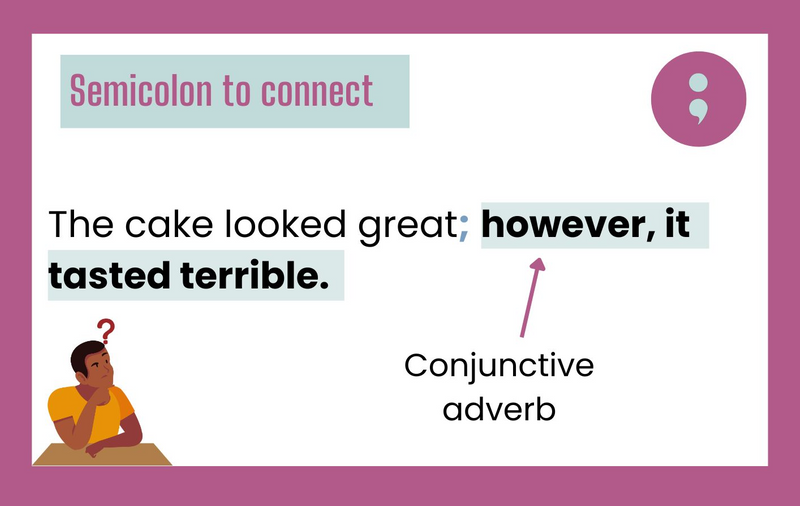
Notice the semicolon goes before the conjunctive adverb (a word that's similar to a coordinating conjunction like "and" or "but"). In this case, the semicolon goes before "however". It joins the independent clauses together and shows the contrast between them.
Quiz Time!
Choose the correct punctuation mark (colon or semicolon) for the blank space in the sentence below:

She packed everything she needed for the trip ___ a warm jacket, hiking boots, a first-aid kit, and plenty of snacks ___ she was ready for the adventure ahead.
A. colon (:) then semicolon (;)
B. semicolon (;) then colon (:)
C. colon (:) then colon (:)
D. semicolon (;) then semicolon (;)
Quiz
Select the missing punctuation:
The colon (:) goes first because the second part introduces a list. The semicolon (;) goes next to separate two independent clauses that are closely related. B is incorrect because a semicolon can't introduce a list. C is incorrect because the second colon is unnecessary and colons don’t connect two independent clauses. D is incorrect because a semicolon can't introduce a list.
Take Action

This Byte has been authored by
Krystal McKenzie
Learning Designer & Educator
MA