
This logo isn't an ad or affiliate link. It's an organization that shares in our mission, and empowered the authors to share their insights in Byte form.
Rumie vets Bytes for compliance with our
Standards.
The organization is responsible for the completeness and reliability of the content.
Learn more
about how Rumie works with partners.
 Photo by Vitaly Gariev on Unsplash
Are you currently demotivated? Are you working 60 hours plus a week doing something you dislike? Are you looking for a career change?
If so, you're in the same position I was in just over a year ago.
Because staying in a career you dislike can make you feel:
depressed
unmotivated
lost in yourself
Before you quit, there are a few things you need to consider.
1. Ask yourself why you want to quit
 Photo by Antonio Araujo on Unsplash
There may be many reasons why you want to quit a job you dislike. It could be due to financial, social, health, or character reasons. Either way, you are justified to feel the way you feel, and walking away may be the best decision.
If you are planning to quit, ask yourself these questions:
Why do you dislike the job?
Why do you feel lost in this job?
Why does the job not align with your values?
Your responses could be varied. But in general, you should respond using the following starter sentences.
I dislike the job because of....
I feel lost because of...
The job doesn't align with my values because of....
When I decided to leave teaching, I reflected on my reasons and what my next steps could be for the future.
I left teaching due to burnout and I decided to work in learning design to combine my passion for education and design.
2. Prepare your exit plan
When I quit my job, I had a rough idea of what I wanted to transition into. I wanted to move into the world of educational technology. But for many others, they simply quit with no plan.
If you're ready to embark upon a new line of work, create a solid exit plan that includes the following:
What field you'd like to go into
How long you plan to be out of work
What certifications or training you'll need to complete
Remote/hybrid/in-person opportunities
Salaries
Make sure your new career aligns with your new career goals. Of course, you don't want to dodge one bullet for another.

Did you know?
If you need to upskill for a new career, see if your country or region has any public training programs you can join.
3. Get your resume sorted
Your resume needs updating if you want to embark on your new career.
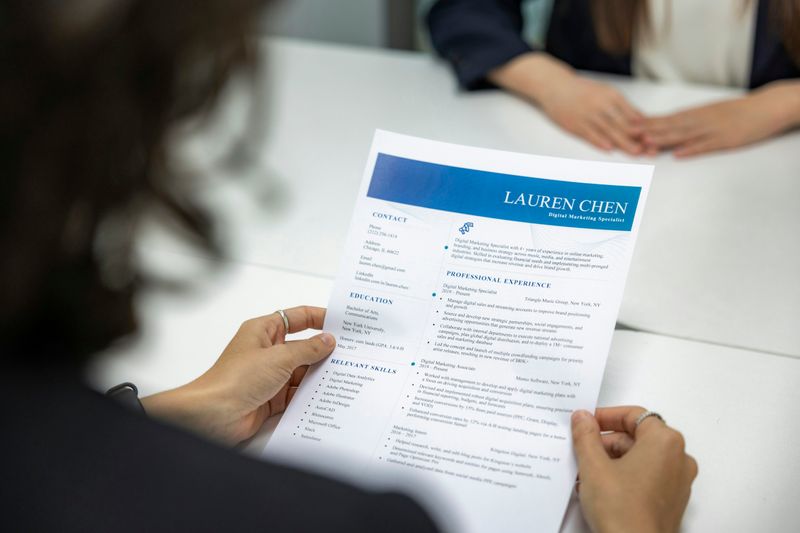 Photo by Resume Genius on Unsplash
Here’s how to make your resume work for you:
Lead with a strong summary.
Focus on transferable skills (soft vs hard skills).
Reframe past roles — translate your experience into language that fits your new career.
Add relevant extras — courses, certifications, side projects, or volunteer work that show you're serious about the shift.
Tailor it for every application.
Make your pivot look intentional, strategic, and full of value.
Personally, when I left teaching, I looked for internships/jobs online via LinkedIn and connected with people in the field of educational technology. This helped improve my resume so that I could target EdTech jobs.
I focused on transferable skills like communication and collaboration in teams, in addition to my online creativity skills, so that I could appeal to EdTech employers.
Quiz
Sarah is a high school teacher who wants to become a college student advisor. What are some transferable skills to highlight on their resume?
Experience with education technology, communication, and collaboration are all transferable to Sarah's new role. Behavior management, however, is only relevant to teaching.
Did you know?
The best way to search for a job is to combine online and offline strategies. Use major job boards like Indeed and LinkedIn to network with people in your field, attend job fairs, and reach out to employers directly. Remember, most jobs aren't advertised, so building relationships is key to finding work.
Take Action
To make the best of your career transition, be sure to:
This Byte has been authored by
Esme Youssef
Learning desiger
MSt