
What do you think is the #1 skill that tech employers are looking for?
Most people would guess AI, but actually it's critical thinking! I know, I was surprised too.

Maybe you've heard of "critical thinking" before, or maybe you read it in the requirements for a job description.
Are you wondering what critical thinking skills are? How can you demonstrate them as you're starting a new tech job in the age of AI? How can they help you in your tech career to stand out among other employees and next to AI?
Why Critical Thinking?
Great question! Maybe you're thinking, "Hmmm, I don't know, sounds hard. Why bother?"

The main reason to use critical thinking is to avoid being a robot at work. Critical thinking shows you're a human being with unique creativity and insights. This sets you apart from AI.
Even as a junior employee, critical thinking helps you in your career, and it helps your company build amazing products and make more money. It might sound like a lot, but there are a few simple steps you can follow to grow your career using critical thinking.
Did you know?
What Is Critical Thinking?
Some definitions of critical thinking include words like:
judgment, analyzing, curiosity, skepticism, decision making, identifying bias, evaluating information

I don't know about you, but lists of corporate speak like that make my eyes go blurry. So what does all that mean in the tech workplace?
The best way to show critical thinking is to ask questions.
As a junior employee just starting out, everyone expects you to have questions and still be learning. That's great news, because asking questions is the basis of critical thinking in the workplace. Make sure to ask open-ended questions like "why" or "how" instead of just yes/no questions.

You might be wondering how you can ask questions when you're new, without being seen as "rude" or looking "dumb". Follow these strategies:
Talk to your manager in your 1:1 meeting.
Raise your hand and ask during a team meeting.
Add comments to a shared document with your questions.
Write down your questions during a meeting to ask your teammate later.
Talk to teammates during lunch.
Direct message a coworker or your manager.
Ask the question in a team channel on Slack or Teams.
Critical Thinking About Users and Usability
In the tech industry, customers, or users, are everything. Without them, there are no companies or corporations or products.
In your tech career, you'll work on products that all have kinds of unique users. Your users might be users on mobile devices in North America, or your users might be people of all ages who stream content onto tablets using web browsers.
Whoever they are, you can use critical thinking to help them out.
Consider these questions:
Who are the users and their demographics? The design team usually has this information
What languages do they speak? Will the product need to support other languages now or in the future? This is called internationalization or localization.
What are the accessibility goals for the product? For example, how can people with visual impairments who rely on screen readers still use the app?
What biases might be built into the product or the designs? Think about users who are very different from you and your coworkers.
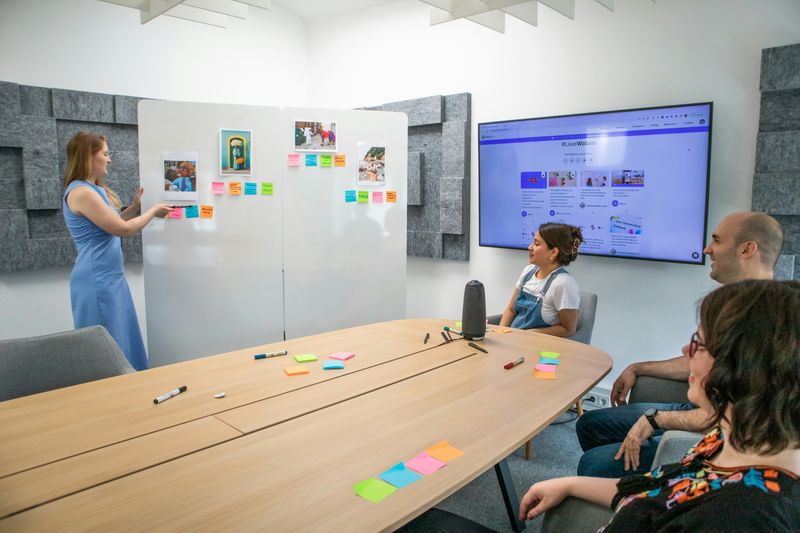 Photo by Walls.io on Unsplash
Case Study
Your design team has a new tool for users. They've created a design document with details and visuals, and they're going to present it to the whole team tomorrow.
How can you use critical thinking skills to engage with the design team on the new tool?
A. In your next 1:1 with your manager, ask them how accessibility will be integrated into the new tool.
B. In the meeting with the design team, ask if the tool will need localization for users who speak languages other than English.
C. In the meeting, ask the designer why they're using such an ugly logo.
D. Before the meeting, contact the designer and ask for more information about who the users are.
Quiz
Select all ways to use critical thinking skills to engage with the design team:
Did you know?
Subscribe for more quick bites of learning delivered to your inbox.
Unsubscribe anytime. No spam. 🙂
Critical Thinking About the Product
In addition to thinking about users, there are lots of opportunities to show critical thinking skills around the product you're helping to build! This can show your team that you want to be involved, and that you're thinking long-term.

Consider these questions:
How will success be measured for your product or for a new feature? Terms like "analytics" or "metrics" usually get thrown around here. How can you measure user behavior to determine if the product is actually useful and making money?
Using analytics or metrics, how can your team run experiments to see what works for users? Usually called an A/B test, this puts users into one of two or more "experiments" to see which is better.
What problem is this product or feature solving for users? Sometimes what a user says they want won't actually address the problem they're trying to solve.
 Photo by Adam Bezer on Unsplash
Case Study
Your product manager calls a meeting with your team to discuss a new feature that allows users to sort items in their cart alphabetically. Your manager, the designer, and other engineers are also in the meeting. You feel insecure being the newest employee in the room, but you have questions and want to show critical thinking.
Which questions show critical thinking about the product?
A. During the meeting, ask when they want the new feature to get released.
B. Add a comment to the product document that asks about A/B testing this new feature with the existing cart functionality.
C. During the meeting, ask what problems users are currently having with the cart that this addresses.
D. After the meeting, ask your coworker what kind of analytics you will need for this new feature.
Quiz
Select all questions that show critical thinking about the product:
Critical Thinking About Your Career
Now is a crucial time to start doing some critical thinking about your career. You might be busy with onboarding and getting to know your team, but if you keep bigger goals in mind, it will help you be intentional about your career and avoid getting stuck.
Consider these questions:
What are the current and upcoming projects your team is working on that you are interested in? Can you work on projects that align with your career goals?
What technologies, tools, or skills do you want to learn about?
What are the leveling guidelines (criteria for getting promoted) for your role?
Who on your team or in your org has a job that looks interesting? It's good to know about other options in the tech field because many people change during their careers.
Case Study
Your manager explains two upcoming projects to you and asks which you want to work on. They're pretty different projects, and you don't totally understand what's involved or how they can help you grow.
Which steps show that you're thinking critically about your career?
A. In the lunchroom, ask your coworker what they know about the projects and what technologies they'll use.
B. In the design document, leave a comment that you want to work on this project because it will help you get promoted.
C. During your 1:1 meeting with your manager, ask how the projects might align with the leveling guidelines for your role.
D. Ask the designer on your team to meet for coffee to find out more about their role and how they designed the two projects.
Quiz
Select all steps that show you're thinking critically about your career:
Take Action

Put your critical thinking skills to work!
Your feedback matters to us.
This Byte helped me better understand the topic.