What's stopping you? If you're worried that you may have skills gaps, there are ways that you can overcome them before you become a teacher. If you can improve your subject knowledge, communication, lesson planning, and problem solving skills, you'll be off to a strong start.
Did you know?
Skills Gap 1: Subject Matter Knowledge
As a teacher, you must know more about the subject you teach than your students do. In many subjects, you will require knowledge that is both deep and broad.
Whether you want to teach in an elementary school or a high school, having up-to-date knowledge of the subject will make you a better teacher.
If you're worried that you may lack knowledge, there are some easy steps to take:
Join teacher groups on social media.Use social media and join some subject-specific teaching groups where different teachers share their resources. This will give you a good starting point for finding up-to-date examples.
Use your free time to learn. Listen to, read, or watch relevant material. Select material from a trusted source such as the BBC or the Primary Knowledge Podcast.
Take classes. Enroll in a community college or night school and use your time to study more about the topic you wish to teach.
Quiz
Tina was just assigned to teach geography at her school. She took some geography courses in college but hasn't really thought about geography since she graduated. What can Tina do to find relevant examples for her lesson plans? Select all that apply:
Loading...
Skills Gap 2: Lesson Planning
A lesson is how a teacher organizes their lesson to ensure that their class meets the set goals and teaching objectives.
So, it's important to spend some time practicing writing lesson plans before you become a teacher. It will improve your confidence, make for a better lesson flow, and ensure your classes meet their goals.
Bridging the Skills Gap
If you haven't taught before, you can spend some time thinking of lesson plans for the grades and subject you may teach. Lesson plans should include:
The objective: It's what you want your students to achieve. It should be specific, measurable, attainable, relevant, and timely.
The lesson itself: Think about how you'll get your students' attention and the activities you want to include in your lesson.
Assessments: They'll help you find out if your students have learned the material. This could be anything from a quiz to a written reflection on the lesson or a group project.
To learn more about lesson planning, check out these resources:
As a teacher, you will be required to communicate with students, parents, management, and colleagues. Your communication skills will directly affect how successfully you teach.
Bridging the Skills Gap
You can practice communication skills at home:
Body language:When you're teaching, it's not just what you say, but how you use your whole body that sets the tone for the class. If you want to build trust, help students stay focused, and create a warm classroom atmosphere, be sure to:
Maintain an open posture.
Make eye contact with everyone in the room.
Smile often.
Lesson delivery: Take a video yourself giving a lesson and score it against a checklist like this one.
Verbal communication: As a teacher, you must speak to parents warmly and clearly. Remember you are trying to work together to solve the problem. You can practice this at home by role-playing with friends or family.
Written communication: As with verbal communication, teachers need to write clearly and in plain language to get information across simply. You can practice this at home by emailing friends or family and getting their feedback.
Quiz
Mark has decided to become a teacher. People often comment that his body language is very closed off and he looks at the floor when he speaks. What can Mark do to get better at communicating with classes before he becomes a teacher? Select all that apply:
Loading...
Subscribe for more quick bites of learning delivered to your inbox.
Unsubscribe anytime. No spam. 🙂
Skills Gap 4: Problem Solving
Teachers face many challenges, including classroom behaviors, time management, and organizational issues. You need to be able to deal with these challenges head-on.
Bridging the Skills Gap
While there is no set solution to any problem, following these six steps can help you see the problem in a new light and reveal solutions.
Have a clear picture of your problem. If you understand the problem clearly, then you have taken the first step to solving the problem.
Break it down into parts and prioritize. Instead of seeing it as a big, immovable object, you can focus on a small part each time.
Look at your problem from a fresh perspective. It can be useful to try and see it differently, especially when you are looking at a complex problem.
Use your own expertise. Think about previous problems that you faced and how you solved them.
Weigh up your options. There is usually more than one solution, so being able to decide which is the best is important.
Keep an eye on the problem. Once you've found a solution, it's important to keep an eye on the problem and make sure it is truly fixed.
Education is mainly about solving problems, and the better you can do that as a teacher, the more successful you will be.
Try this: Volunteer at school or speak to someone who is already a teacher to find out firsthand what is required to solve the many problems you'll face.

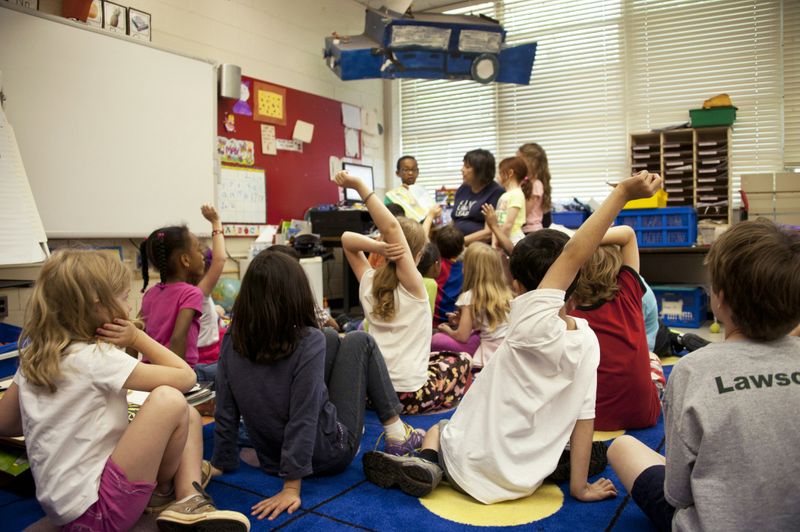 Photo by CDC on Unsplash
 Photo by Vitaly Gariev on Unsplash