
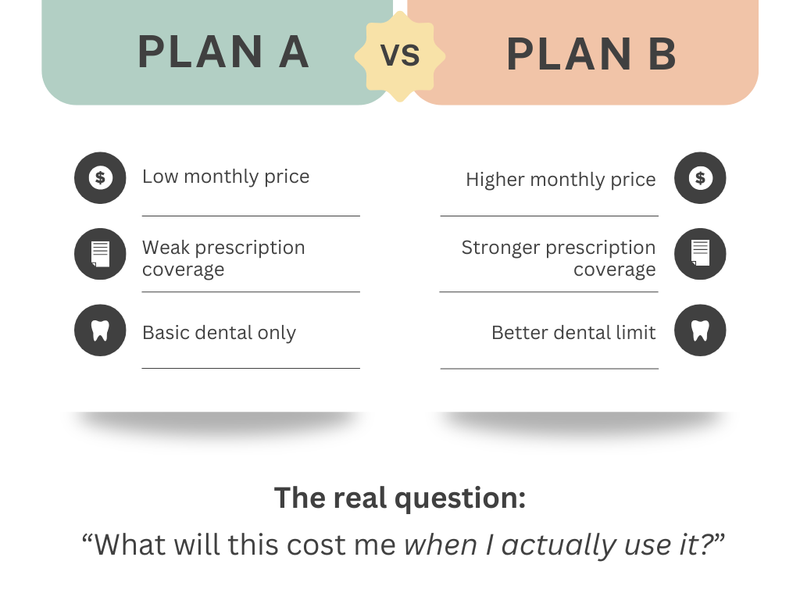
A health plan can look “cheap” until you actually use it.
Maybe the monthly price is low, but your medication still costs a lot. Or maybe dental is included, but only for basic cleanings.
 All infographics in this Byte were created by the author using Canva. To hear audio descriptions of these images, click play on the audio player below each image.
In Canada, public health insurance is often your starting point. But prescriptions, dental, vision, therapy, physio, and travel medical coverage may depend on where you live, your eligibility, or extra insurance.
The real question you need to ask yourself is what this plan will cost you when you actually need to use it.
The best plan isn’t always the cheapest one! It’s the one that protects you from the costs you’re most likely to face.
What Coverage Do You Already Have?
Before you compare private plans, check what’s already available to you.
Start with your public health coverage.
 Ask yourself:
Do I have a valid provincial or territorial health card?
What does my province or territory cover?
Do I have coverage through work, school, a union, a parent, a partner, or a spouse?
Am I eligible for a government program?
Am I new to Canada and waiting for coverage to start?
 Think of coverage like layers:
Layer 1: public health insurance
Layer 2: work, school, family, or government benefits
Layer 3: private insurance for extra gaps
Don’t pay for extra coverage until you know what you already have!

Knowledge Check
Jordan is comparing private plans. What should they check first?
A. Which plan has the longest benefits list
B. What coverage they already have through public, school, work, or family plans
C. Which plan has the lowest monthly premium
D. Whether the plan has travel coverage
Quiz
Jordan is comparing private plans. What should they check first?
What Do You Actually Need Covered?
A plan is only useful if it covers care you’re likely to use.
Make a quick “must-have” list.
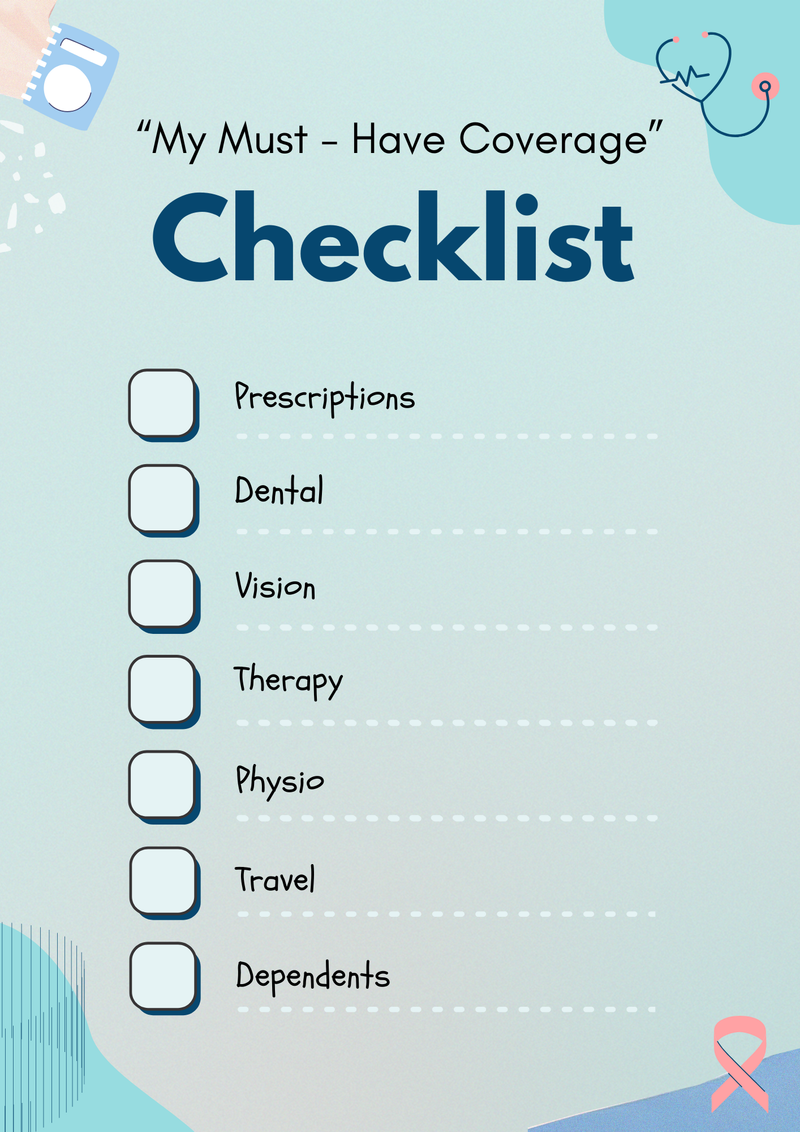
 Ask yourself:
Do I take prescription medication?
Do I wear glasses or contacts?
Do I need dental care?
Do I need to see a therapist, physio, chiropractor, or massage therapist?
Do I travel outside my province or Canada?
Do I have dependents who need coverage?

Assess Plans vs. Your Needs
Once you've answered these questions for yourself, compare each plan to what you really need in your life.
If you take medication, check:
the coverage percentage
whether your medication is included
If you need therapy or physio, check:
the per-visit amount
the yearly maximum
provider rules
whether a referral is needed
Choose based on what you’ll actually use, not the longest benefits list.
Knowledge Check
Emilia takes medication every month and sees a physiotherapist. Which plan detail matters most?
A. Whether the plan has a long list of benefits, even if most don’t apply to her
B. Whether the plan has the lowest monthly premium
C. Whether the plan includes travel coverage for trips she does not take
D. Whether the plan covers prescriptions and physio with limits she can afford
Quiz
Emilia takes medication every month and sees a physiotherapist. Which plan detail matters most?
What Will You Pay Every Month?
The premium is what you pay to keep the plan active.
You usually pay it every month.
A lower premium can look better, but it may also mean:
less coverage
higher costs when you use care
lower yearly limits
fewer covered services
A higher premium may be worth it if you use health services often.
Example
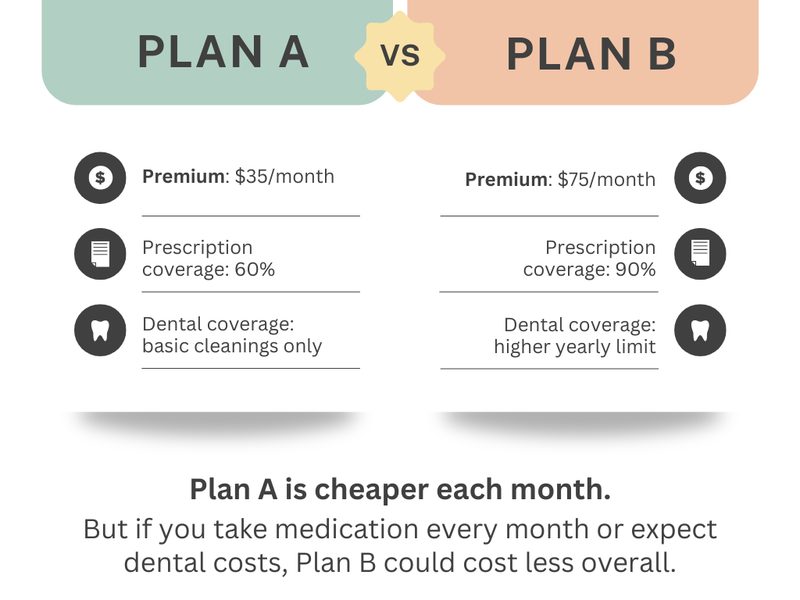
Image created by the author using Canva.
This example shows why the cheaper monthly plan isn’t always the better deal.
 Ask yourself:
Don’t only ask, “What’s the monthly price?”
Ask, “What will this probably cost me in a normal year?”
Knowledge Check
Sam rarely uses health services. They want basic extra coverage and a lower monthly cost. Which plan might make sense?
A. A lower-premium plan with fewer benefits
B. The most expensive plan available
C. A plan with strong physio coverage they do not use
D. A plan that does not explain its limits
Quiz
Which plan might make sense?
Subscribe for more quick bites of learning delivered to your inbox.
Unsubscribe anytime. No spam. 🙂
What Will You Pay When You Use It?
The monthly premium is only one part of the cost.
You also need to check what happens when you actually use the plan.
 Look for these words:
Deductible: The amount you pay before the plan starts paying.
Example: If your deductible is $100, you pay the first $100 of eligible costs.
Co-pay: A set amount you pay when you use a service.
Example: You pay $20 for a prescription, and the plan pays the rest.
Coinsurance: A percentage split between you and the plan.
Example: The plan pays 80%. You pay 20%.
Coverage limit: The most the plan will pay for something.
Example: The plan covers up to $300 per year for vision care.
 The key question is:
"After the plan pays, what’s left for me?"
That leftover amount is your out-of-pocket cost.
Are You Eligible for this Plan?
A plan can look perfect and still not be available to you.
 Before comparing every detail, check whether you qualify.
You may be eligible through:
your province or territory
your employer
your school
your union or professional association
a parent, partner, or spouse
a private insurance company
a newcomer or visitor plan
a government program for certain groups
Your eligibility can depend on:
where you live
your age
your student status
your job status
your immigration status
whether you have dependents
whether you already have other coverage
Check for eligibility early so you don’t waste time comparing a plan you can’t use.
Did you know?
What Tradeoff Makes Sense for You?
Most plans involve a tradeoff.
You may not get:
the lowest premium
the strongest coverage
the easiest eligibility
the highest yearly limits
...all in one plan.
So choose based on your biggest risk.

Common tradeoffs:
Lower premium
Good if you rarely use health services
Watch out for higher costs when you need care
Higher premium
Good if you use prescriptions, dental, therapy, or physio often
Watch out for higher monthly costs
Strong dental coverage
Good if you expect dental costs
Watch out for weaker coverage in other areas
Strong prescription coverage
Good if you take regular medication
Watch out for deductibles, drug lists, and coverage limits
Travel coverage
Good if you travel outside your province or Canada
Watch out for trip length, destination rules, and exclusions
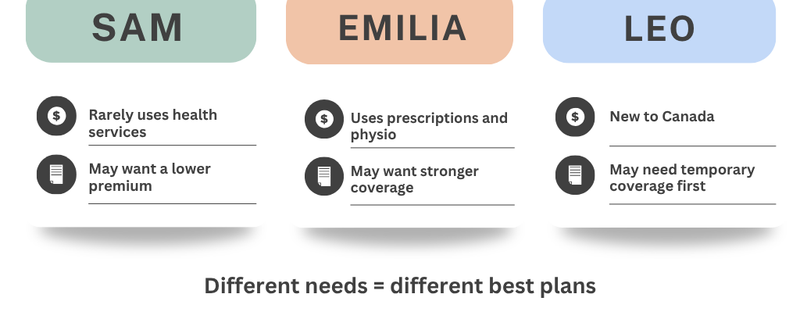
Different needs require different best plans, and the best plan protects you from the costs you’re most likely to face. The right choice depends on your situation.
Example
Sam rarely uses health services, so a lower-premium plan may work.
Emilia takes medication every month and sees a physiotherapist, so a higher-premium plan with stronger drug and paramedical coverage may save money.
Leo is new to Canada and waiting for public coverage, so a temporary private plan may matter most.
Did you know?
Take Action
Use a health insurance plan comparison chart to compare your options side-by-side.
To make your own, use this checklist:
Your feedback matters to us.
This Byte helped me better understand the topic.