
Managing your finances can be as simple as brushing your teeth.

It's just not part of your routine yet.
You want to save more and track your daily expenses. But building a habit around it is harder than it sounds.
What if you could do it without relying on motivation or trying to remember every time?
This is where habit stacking comes in.
What is Habit Stacking?
Habit stacking means pairing a new desired habit with an existing one from your routine.
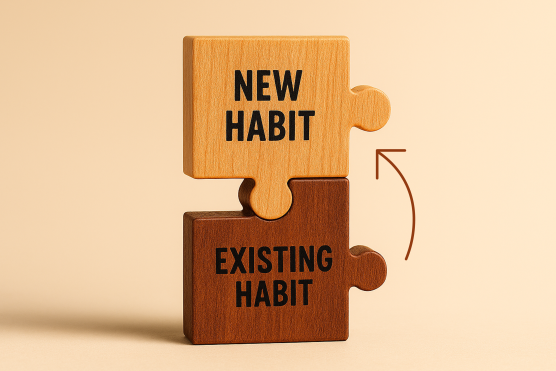 Image created by the author using AI
Building a new habit from scratch takes time and effort. But when you attach it to something you already do regularly, it becomes easier to remember and complete. The new habit starts to fit into your schedule naturally.
When you're consistent, the old habit begins to act as a trigger for the new one. When you perform the old habit, it reminds you to complete the new one too.
 Habit stacking follows a simple formula:
After/Before [current habit], I will [new habit].
Some habit stacking examples from daily life:
After I eat breakfast, I will write down 3 most important tasks for the day.
After I brush my teeth, I will read 3 pages of my book.
Before I sit for dinner, I will go for a 15-minute walk.
Habits like brushing your teeth, eating breakfast, or having dinner happen without much thought. They act as anchors that new habits can piggyback on, like planning your day, reading more pages, or going for a short walk.
How Do I Use Habit Stacking?
Using habit stacking to manage and improve your finances is quite simple.
 1. Make a list of your existing habits.
Begin by writing down habits you already perform daily without fail, no matter how small they seem. These could include:
Brushing your teeth
Commuting to your workplace
Making dinner in the evening
Reading 2 pages of your book
These habits will act as anchors for adding new habits to your routine.
 2. Make a list of habits you want to add.
Write down a few habits you want to build to better manage your finances. Some habits you could include:
Add money to your savings account
Check your bank balance
Review your daily spending
You don't need to do everything in one go. Start with one small habit and visit your list again to add more later.
 3. Pair the new habit with an existing one.
Choose one habit you want to build and stack it with a habit you already follow. Use this simple formula here:
After/Before [current habit], I will [new habit]
Here's what it could look like:
After I take a morning shower, I will check my bank balance.
While I wait for my evening coffee to brew, I will make a bill payment that's due.
When you pair a new habit with an established one, it blends smoothly into your daily routine over time.
Did you know?
Habit Stacking Example to Manage Your Finances
You can build a simple habit stacking routine like this and adjust it to fit your day.
 Morning
After I have breakfast, I'll check my bank balance.
After I sit in a train or cab to go to work, I'll listen to one personal finance podcast episode.
 During the Day
After I order lunch, I'll transfer an equal amount to my savings account or jar.
After I send a work or personal email, I'll check any bank notifications.
Before I buy something I'm unsure about, I'll add it to a wishlist and wait 24 hours.
 Evening
Before I make dinner, I'll log my expenses for the day into a money tracking app or an Excel spreadsheet.
After I do the dishes, I'll check if I stayed within my spending limit for the day.
 Weekly
After Sunday breakfast, I'll review my weekly spending and plan my budget for the next week.
Before I hit the gym on Saturday morning, I'll transfer $X to my savings account.
 Monthly
After my salary is credited, I'll pay my bills.
After I have my morning coffee on the 1st of the month, I'll review last month's expenses and create a budget for the new month.
After I pay my bills, I'll review and pause/cancel subscriptions I no longer use.
Did you know?
Subscribe for more quick bites of learning delivered to your inbox.
Unsubscribe anytime. No spam. 🙂
Some Tips for Habit Stacking Success
1. Practice your habit stack.
Repeat your habit stack every day once you've paired the desired habit with an old one. When you're consistent, the new habit becomes easier to do and stick with.

2. Adjust your habit stack if needed.
You can easily make changes if your habit stack doesn't work the first time. Try to change your anchor habit, simplify the new habit, or choose a different time of day to do it.

3. Find strong anchor habits.
For example, after brushing your teeth every night, check your daily spending instead of doing it after watching TV, which you might not do every day.

4. Choose realistic, specific, and measurable goals.
Instead of "save more money", choose "transfer $100 every Sunday" as your goal.
5. Keep it visible.
Keep your expense tracker or budget sheet pinned on your desktop or mobile phone so you see it every day.
Did you know?
Pick the Better Habit Stack
Meet Riya and Sebastian. They're trying out habit stacking to manage their personal finances. Look at their routines below.
Who is more likely to manage their money effectively?
 Riya
Riya
After I take a shower, I'll check my account balance.
While I drink my morning coffee, I'll read an article on stock investment.
Before I have lunch, I'll transfer $10 to my savings account.
After I come back from my daily walk, I'll enter the day's expenses in my tracking app.
 Sebastian
While I make breakfast, I'll check my account balance.
During my commute to work, I'll transfer money to my savings account.
After I finish work for the day, I'll review my spending.
Before going to bed, I'll learn something about personal finance.
Quiz
Who is more likely to manage their money effectively with their habit stack?
Take Action
Habit stacking can make managing finances simple and even enjoyable. It's easier when you rely on a solid routine instead of willpower.
 Image from Freepik.com
Your feedback matters to us.
This Byte helped me better understand the topic.