
You’re at the hospital. Someone asks, “What seems to be the problem?”
Your mind goes blank.
 Image created by the author using AI
Hospitals can feel stressful, especially when English isn’t your first language. You don’t need perfect English. You need clear words that help staff understand what you need.
A few simple phrases can help you explain symptoms (what you feel or what's wrong), answer questions, and ask for help when you’re confused.
Did you know?
What should I say when I arrive?
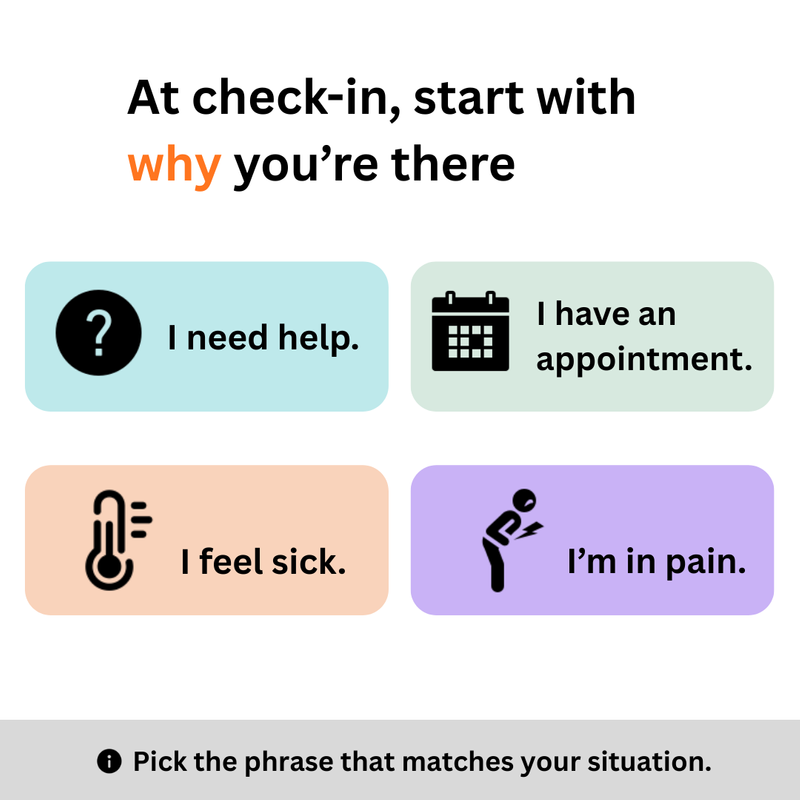 Image created by the author using Canva
Useful phrases:
Start with the reason you’re there.
If you have an appointment:
“I have an appointment.”
“I’m here to see a doctor.”
If you need medical help right away:
“This is an emergency. I need help."
If you don't feel well:
“I feel sick.”
“I’m in pain.”
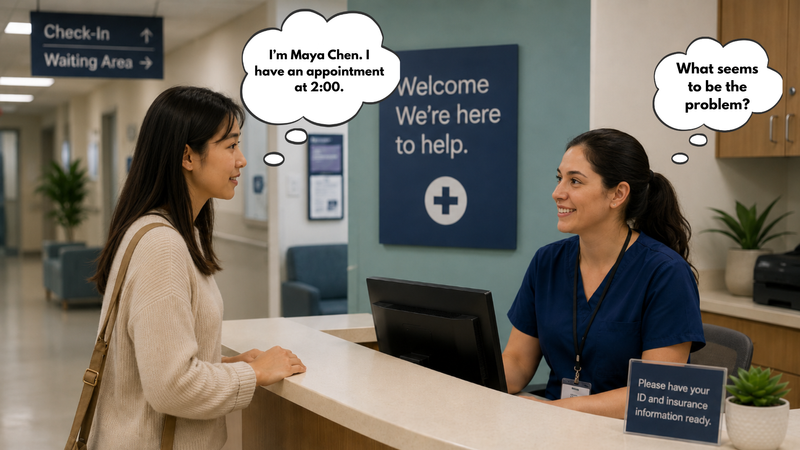 Image created by the author using Canva
You might hear:
"What's your name?" Tell them your first name and family name.
"What's your date of birth?" Tell them the day, month, and year you were born.
"“Do you have an appointment?”
“What seems to be the problem?
Try a full answer:
“I’m Maya Chen. My date of birth is July 1, 2001. I have an appointment at 2:00.”
“I don’t have an appointment. I feel very dizzy.”
“I think this is an emergency. I’m having trouble breathing.”
Knowledge Check 🔍
A hospital worker asks, “What seems to be the problem?”
Which answer is clearest?
A. “I’m not feeling well.”
B. “I’m here because I feel sick."
C. “I think I need to see someone.”
D. “I feel dizzy and I need help.”
Quiz
Which is the clearest answer?
How do I explain what’s wrong?
Use this simple pattern:
 I have ________ (state the problem).
Examples:
“I have a fever.”
“I have chest pain.”
“I have trouble breathing.”
Then add when it started:

“It started this morning/yesterday/two days ago.”
“It comes and goes.”
“It is getting worse.”
You can also say:
 My + body part + hurts.
Examples:
“My throat hurts.”
“My stomach hurts.”
“My back hurts.”
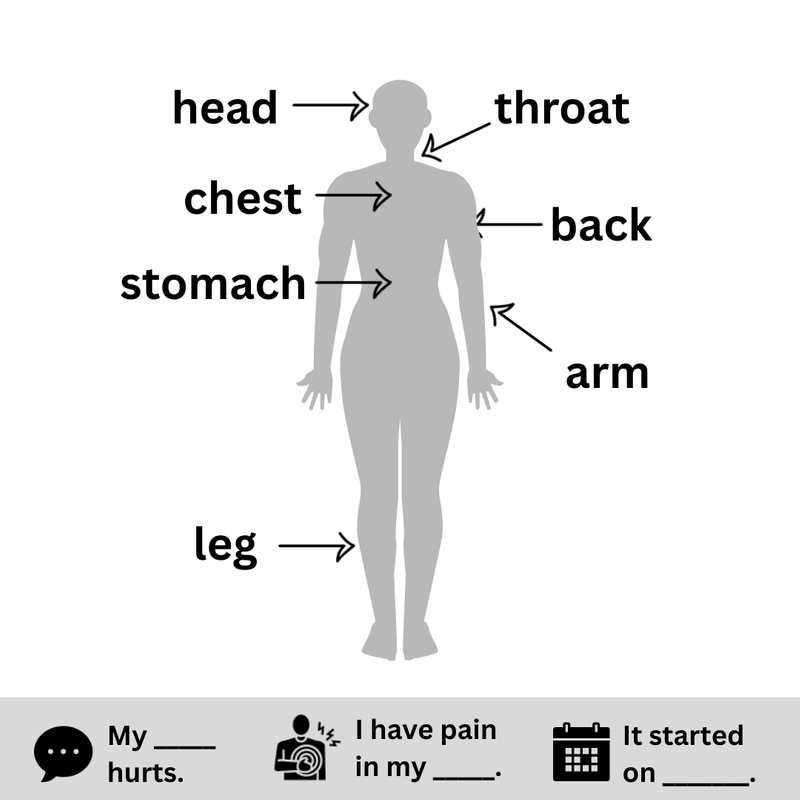 Image created by the author using Canva
Be as clear as possible, so the hospital workers can help you.
Less clear:
“I’m sick.”
The hospital staff won't have enough information to help you.
More clear:
“My stomach hurts. It started yesterday. It is getting worse.”
This gives hospital staff more helpful information.
Knowledge Check 🔍
You’re talking to a nurse. Your throat started hurting this morning, and it hurts more when you swallow.
What should you say?
A. “My throat hurts. It started this morning.”
B. "My throat hurts when I swallow.”
C. “I think I need medicine for my throat.”
D. “My throat is not okay today.”
Quiz
What should you say?
What words help me talk about pain?
Pain words help hospital staff understand how something feels.
Use simple words:
mild = a little pain
bad = strong pain
sharp = feels like a knife or needle
burning = feels hot or like fire
dizzy = you feel like you may fall
numb = you can’t feel part of your body
You can say:
“The pain is mild.”
“The pain is very bad.”
“It feels sharp.”
“It feels like burning.”
“I feel dizzy.”
“My hand feels numb."
Hospital staff may ask:
“On a scale from 1 to 10, how bad is the pain?”
You can answer:
“It’s a 3. I can manage it."
“It’s about a 6. It hurts a lot."
“It’s a 10. It’s very bad and I need help now."
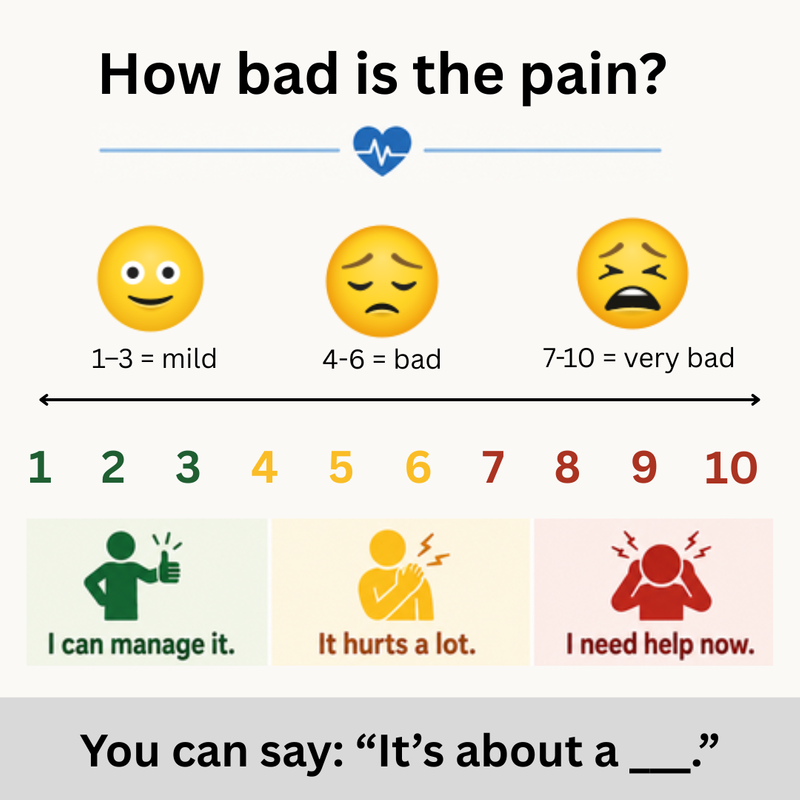 Image created by the author using Canva
Knowledge Check 🔍
A nurse asks, “How bad is the pain?”
Your pain feels strong. It feels like a needle.
What should you say?
A. “It’s about a 7. It feels sharp.”
B. “It’s about a 7. It started yesterday.”
C. “It hurts a lot. It's about a 6 and it comes and goes.”
D. “It feels sharp like a needle. It started yesterday.”
Quiz
Which answer is most helpful?
Subscribe for more quick bites of learning delivered to your inbox.
Unsubscribe anytime. No spam. 🙂
What if I don’t understand?
It’s okay to ask for help.
When you're at a hospital, things often move fast. If you miss something, don’t guess.

Use these phrases:
"Can you say that again?"
Say this if you didn't understand.
"Can you speak more slowly?"
Say this if someone is speaking too fast.
"Can you write it down?"
Say this if reading English is easier than listening.
"Can I have an interpreter?"
Say this if you need someone to translate into your language.
You can also check your understanding:
"So I need to take this medicine twice a day?"
Say this to check how often to take your medicine.
"So I should come back tomorrow?"
Say this to check when to return.
"So I should wait here?"
Say this to check where to wait.
Checking your understanding helps make sure you know what to do before you leave.
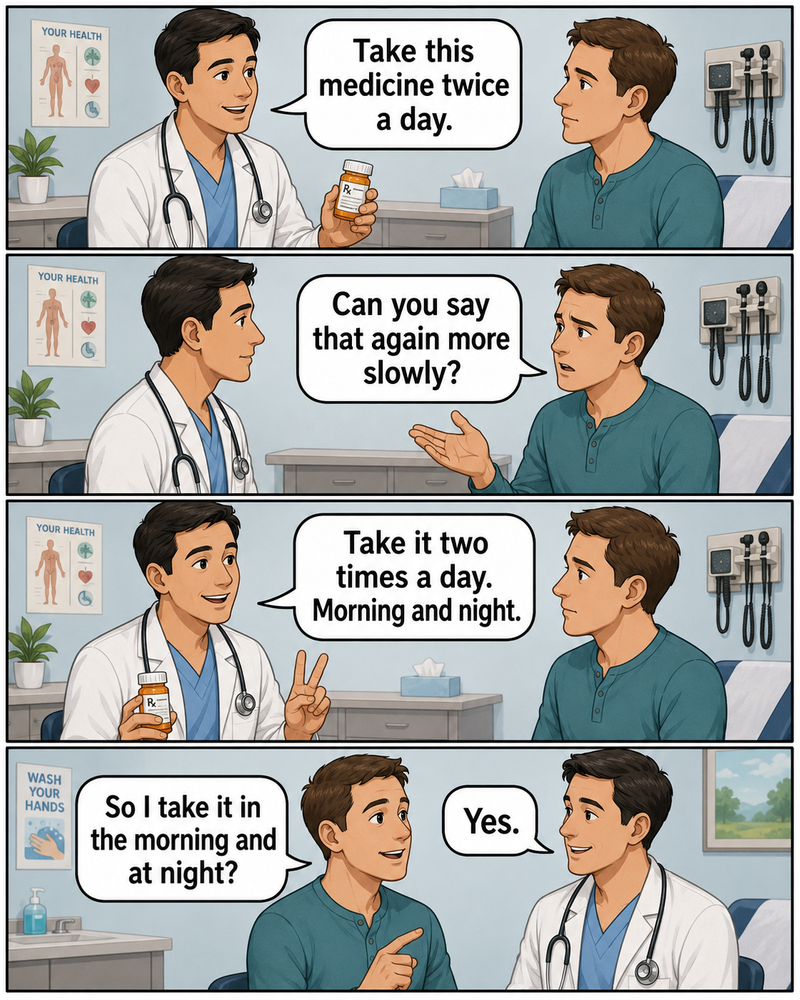 Image created by the author using AI
Did you know?
Take Action
Before your next hospital or clinic visit, set up a hospital note in your phone now, before you need it. If you ever feel nervous, you can show the note to hospital staff or use it to practice what to say.
Use this checklist:
You don’t need perfect English. Clear and simple is enough.

Your feedback matters to us.
This Byte helped me better understand the topic.