
When I started learning guitar, I remember learning the first few chords, and then I got so comfortable doing them that I just got stuck with them. I could play a lot of familiar songs, and so I really didn't push myself to try new chords!
 Do you ever find yourself in a situation like this at school? For example, did you ever try solving a math problem using a new strategy, but didn't feel ready to push yourself to master it?
The learning zone model is a powerful way to help you understand how to respond to academic challenges — and how to grow from them.
What is the Learning Zone Model?
The learning zone model divides your learning experience into three zones:
1. Comfort Zone
This zone is where a person is very familiar and comfortable with what they're doing.
 Key insight: You feel safe here, but you're not growing much.
2. Learning Zone
Also known as the growth zone, this is the zone where you push yourself beyond your current abilities and knowledge, helping you acquire new skills.
Although entering this zone can initially feel uncomfortable, it really is the zone where personal development takes place.
 Key insight: This is where real learning and growth happen.
3. Alarm/Panic Zone
This is the zone where you push yourself to learn way beyond your current knowledge and comprehension, causing you to feel overwhelmed and panicked.
 Key insight: In this zone, learning stops because stress is too high.
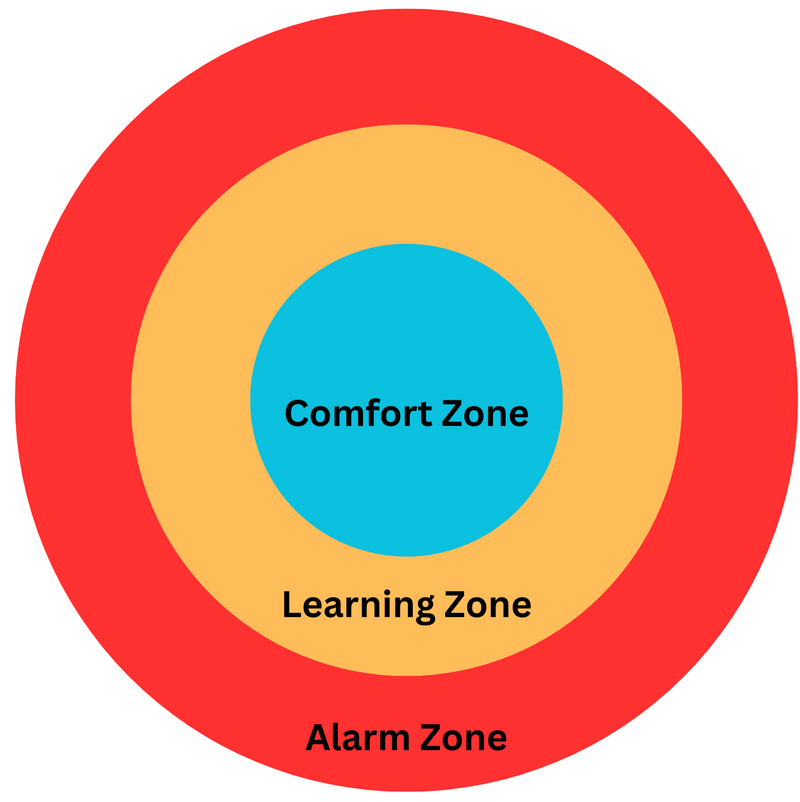 Image created in Canva by Smitha Chungath
Identify Your Zone
Do you remember the fairytale Goldilocks and the Three Bears? Goldilocks always ended up choosing the option that was "just right".
This is exactly what you need to ask yourself when you're learning something: “Is this too easy, just right, or too hard?”
Too easy → comfort zone
Just right → learning zone
Too hard → alarm/panic zone
Comfort Zone
In my case, when I learned the first four chords and got so comfortable playing them, it just felt so easy! I was in the comfort zone.

Examples in school:
Solving basic math problems you already know
Reading an easy book
Repeating memorized answers
Learning Zone
When I decided to learn more difficult chords, I remember working on disciplining myself to practice regularly, and intentionally setting aside time for my practice.
It was uncomfortable, but eventually, I learnde new chords. It made me more confident to try new songs. I could finally step out of my fear and believe in my abilities. It was refreshing and super encouraging!

Examples in school:
Trying a new math concept
Writing an essay with feedback
Asking questions when confused
Alarm/Panic Zone
When I saw others play fingerstyle guitar, I really wanted to try it myself. I browsed through many song videos and started working on learning music theory, the finger style exercises, and much more, until it got so overwhelming that practice time made me anxious and less interested. I clearly was in the alarm/panic zone!

Examples in school:
Being given work far above your level
Too many assignments at once
No support or guidance
Quiz
Jamal is learning how to write a persuasive essay. He finds it difficult but asks his teacher questions and keeps trying. Which zone is Jamal in?
Move from the Comfort Zone to the Learning Zone
To succeed in life, we must stay within our strength zone but continually move outside our comfort zone.
— John C. Maxwell, author
If you're in the comfort zone, there are a couple of ways to try pushing yourself out of that zone, but in a way that doesn't push you too far into the panic or alarm zone.
 Try harder problems and develop resilience.
For example, if you already know your multiplication tables, don't settle for that. Instead, try working on word problems that apply the basics of multiplication. It may be difficult in the beginning, but keep practicing.
 2. Set an achievable challenge by building anchors (something you already know).
If you're working on a class presentation and you feel nervous about it, don't just give in to the thought that it's way too hard. Instead, set an achievable challenge and remember to chunk or break down your task:
Choose a topic you love to talk about (this is your anchor — something you already know).
Present it to your family or a group of friends you are comfortable with.
Next, work on your class topic.
Present the class topic to your family or friends.
3. Go beyond the basic requirement.
When you feel your learning isn't challenging anymore, look for opportunities to go beyond the basics.
For example, if you're working on different division strategies, there may be some strategies that you are already good at. You'll naturally want to use those well-known strategies every time you have to solve a division problem.
Instead, when you're learning new strategies, try using them when you need to solve division problems. This will help you push yourself out of the comfort zone.
 4. Reach out for support and mentoring.
When learning something new, you may need additional help from teachers, family, or friends. It's good to reach out for help.
For example, imagine a new science topic is introduced in class. You notice that all of your classmates understand it, but you're finding it hard to understand the concept.
Try getting help! If raising your hand and asking questions feels intimidating, reach out to the teacher after class or talk to an adult at home who can help.
 This video talks about the importance of building resilience in school.
Quiz
Jay completes his essay assignments by writing the shortest answers possible. What is the best way for Jay to move into the learning zone?
Subscribe for more quick bites of learning delivered to your inbox.
Unsubscribe anytime. No spam. 🙂
Move from the Alarm/Panic Zone to the Learning Zone

"Try harder! Try harder! You'll surely be able to do this."
How many times have we all heard this when facing challenging and overwhelming situations?
But trying harder is NOT the smart move when you want to move from the alarm/panic zone to the learning zone — it’s changing how you approach the challenge that truly will help.
Here are practical strategies that will help when you find yourself in the alarm/panic zone.
Break down the task. Turn the big task into 3–5 small tasks and focus on just one step at a time.
Get help. Ask a teacher or family member for help and work with a partner. Use examples, notes, or practice worksheets to get a better understanding.
Start with what you know. Always try to solve an easier version of the challenging problem. Think of what you already know and use that to tackle more challenging tasks. Look at a similar example and ask yourself: “What part do I already know?”
Take a pause or rest. Take a short break and calm down. Try a deep breathing exercise, go for a walk, or stretch. A calm brain works better.
Be curious and develop a growth mindset. Change your reactions with curious questions. For example, instead of reacting in fear by saying, "I will fail," try thinking, "What can I learn from this?"
Be kind to yourself. Focus on progress and not perfection. Celebrate small wins and keep track of the improvements you made. Accept mistakes as part of learning.
When something feels too big, remember: break it down, get help, start small, and keep going!
Did you know?
Take Action
Knowing your sweet spot for learning is important. Staying resilient helps you get back to learning even when you fail.
In my case, when I found myself in the alarm/panic zone:
I first stopped my old approach to how I was trying to work.
I started my new approach by setting small goals.
I started practicing consistently, starting with 15 minutes every single day.
I prioritized my tasks and was kind to myself when I failed multiple times.
I gave myself time to work on them without losing patience.
Eventually, I made so much progress. My learning journey is still ongoing, but now I have much more enthusiasm and confidence.
 Take the practical steps to use the Learning Zone and overcome challenges at school:
Your feedback matters to us.
This Byte helped me better understand the topic.