
 Photo by Vitaly Gariev on Unsplash
Have you ever heard someone in the workplace make a comment about another coworker's culture being strange?
Maybe you have made comments about someone's culture that you thought were lighthearted but were actually rude and inappropriate.
This is called ethnocentrism — here's what you can do to identify and avoid this behavior.
What is Ethnocentrism?
 Photo by Brooke Cagle on Unsplash
Ethnocentrism decribes people who believe their cultural experiences are "correct" and use their own culture's standards to "assess other cultural groups."
Ethnocentrism could look like:
Making negative comments about cultural traditions.
Telling someone their values or beliefs are wrong.
Thinking negatively of someone who doesn't share the same experiences as you.
Ethnocentrism in the workplace can sound like:
"People from your country just don't work as hard as we do here."
"Most of us here speak English, so why should we have to accommodate another language?"
Notice how these comments single out the speaker's culture as the one that should be followed, while making the other person feel like an outsider. Comments like these can make the workplace an uncomfortable environment for whoever they target.
Quiz
Danielle brings a cultural dish to share at work. Which of these responses are appropriate for someone to say to her? Select all that apply:
Recognizing How Different Cultures Interact
 Photo by Vitaly Gariev on Unsplash
In your workplace, you could be working alongside people from all sorts of different backgrounds, cultures, and experiences. It is important to recognize how different cultures interact with one another to foster an inclusive work environment.


Think about two people from different cultures working on a project together. They each bring their own perspectives to the collaboration, but they may favor their experience over each other.
To make sure they can both express themselves without worrying about ethnocentrism, they should embrace cultural sensitivity.
This could look like:
Being open-minded, understanding, and listening. What can they learn from each other?
Seeking common ground. What can they agree on?
Checking Cultural Biases
 Photo by Campaign Creators on Unsplash
Since ethnocentrism is based on a person feeling like their culture is the correct way to do things, it's important to check your own cultural biases.
 Do
Do
Reflect on anything you say that may come off as biased.
Seek diverse POVs to gain a new perspective.
Use inclusive language that is respectful and makes everyone feel welcome.
Open yourself up to feedback on biases and learn from it.
 Don't
Don't
Get defensive if someone comments on your biases.
Only seek validation from those who would agree with you.
Use language that targets someone's differences.
Brush off the feedback from coworkers on your biases.
Subscribe for more quick bites of learning delivered to your inbox.
Unsubscribe anytime. No spam. 🙂
Adapting Behavior
 Photo by Hannah Busing on Unsplash
Once you start to see how different cultures interact in the workplace and how you can acknowledge your own biases, you can begin adapting your behavior to contribute to an inclusive work environment. Think about some ways you could go about this:
Be understanding. Listen to everyone and don't allow assumptions to rule your perception of people.
Be collaborative. Our differences make us who we are. Each person has a unique perspective they bring to the workplace.
Be a problem-solver. Work with everyone to find solutions that include everyone.
Tips to Avoid Ethnocentrism in Communication
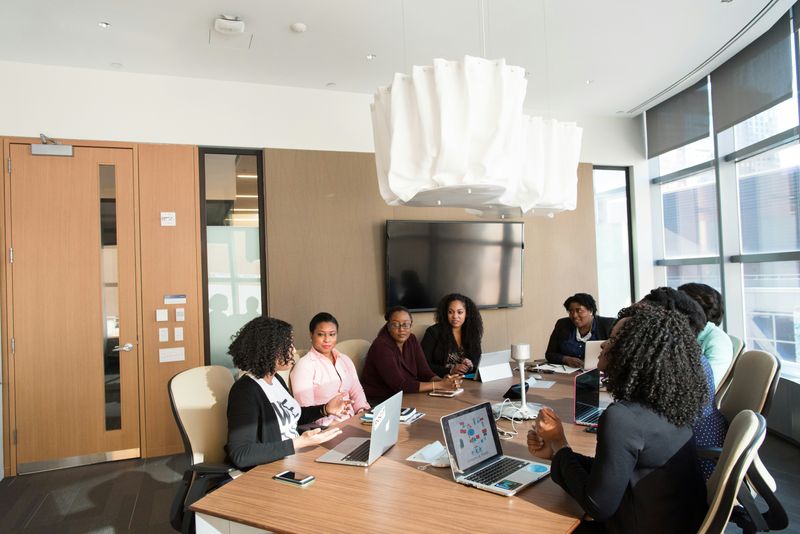 Photo by Christina @ wocintechchat.com M on Unsplash
Allow everyone to share aspects of their culture in the workplace.
ex. Facilitate a team meeting where everyone shares something about their culture.
If you overhear a negative comment, speak up. Offer support to the target of the comment. Check out this Byte for examples: 4 ways to show up for others as an upstander 🫶
Be self-aware and acknowledge how you may have been ethnocentric.
ex. Reflect on what you say to others about their culture.
Instead of calling out differences, highlight what you have in common.
ex. Talk about shared interests and work.
Did you know?
Scenario
 Photo by Vitaly Gariev on Unsplash
You're at a meeting discussing a project with your colleagues, deciding which roles and responsibilities you'll all take.
Jacob thinks that he should take on most of the project workload because it will make him look good to their boss and hopefully get him closer to a promotion.
Julia thinks it would be better if everyone had an equal amount of work so the finished project would make the entire group look good. Lily agrees with her.
Jacob then explains that where he grew up, men took care of difficult work and women were left with simple tasks to complete.
Lily mentions that where she's from, people don't put their individual wants over the needs of everyone else.
You say to Jacob that while you hear his point of view, it may be better for the project and the group if everyone had an equal workload. If the project goes well, their boss will think positively about everyone, not only Jacob.
Jacob says he understands where everyone is coming from and apologizes for his earlier comment.
Quiz
What tips for avoiding ethnocentrism were shown in this scenario?
Take Action
 Photo by Antonio Janeski on Unsplash
With these tips in mind, you can make your workplace a more comfortable and inclusive environment for everyone.
Your feedback matters to us.
This Byte helped me better understand the topic.