
Imagine this...
You're a product manager at a language learning app, and your morning schedule is full. You need to approve design mockups with the UX team, check a new lesson module with teachers, and get a timing update from engineers on bug fixes.
Suddenly, your CEO sends an urgent message: "Our paid subscriptions dropped by 15% this month! We must build an AI chatbot right now to save our revenue!"

Your day is suddenly interrupted. You might feel panicked, want to say "yes," and change your team's weekly plan. But critical thinking in product management means learning to evaluate high-stakes pressure before acting.
Your 4-step critical thinking steps:
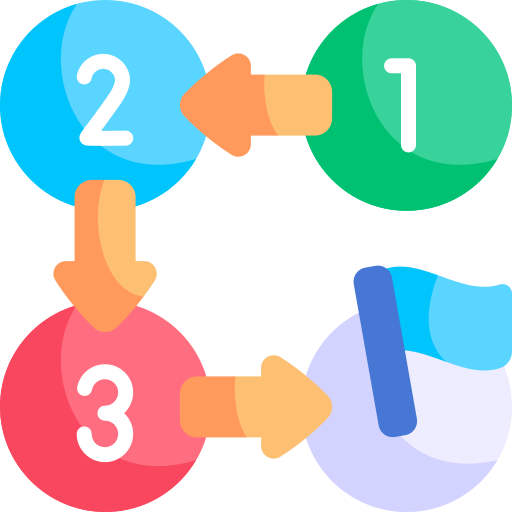
Pause & triage: Determine if the request is truly an immediate emergency.
Investigate: Uncover the real root cause behind the surface problem by asking questions.
Map hidden guesses: Separate proven facts from high-risk assumptions.
Test before building: Validate your primary assumption with fast, low-cost experiments.
Step 1: The Triage Process
When chaos happens, triage helps you organize tasks, protect your team's work, and pick the one task to do right now.

Here's how triage would work in our language learning app scenario:
Group Tasks by Risk
Critical emergency: A big problem that breaks the system right now (e.g., website crash, security leak).
We don't have this problem today. Our app is working fine.
Important, but it can wait: A serious problem that affects business goals, but is not getting worse every minute.
The 15% drop happened over a whole month. Taking 45 minutes to study the data first won't cause more harm.
Low importance: Sudden ideas that feel urgent because a boss asked, but lack real proof.
Our CEO's AI chatbot suggestion should wait until we prove it's necessary.

Order Tasks by Urgency
Help your team first: Approve the UX designs and check engineering bugs (15 minutes). If you wait, your team can't work.
Protect current work: Keep developers working on their planned bug fixes. Stopping them mid-week wastes a lot of time.
Delay non-urgent meetings: Move the lesson review to later in the afternoon to free up focus time now.

Choose What to Do Next
Wrong action: Start designing an AI Chatbot right away. This takes huge effort and does not explain why users leave. ❌
Wrong action: Say "No" to your manager. This causes bad feelings and ignores a real business loss. ❌
Right action: Block 45 minutes to study cancellation data so you can answer your manager with real facts. ✅

Quiz: Ordering App
Scenario: Imagine you're a product manager for an app that tracks customer orders for local businesses. Your product team has several priorities this week:
Fixing the app's map tool
Building new live tracking tools for the app
Fixing a bug that causes the app to crash during payment
Your developers send you an update on Monday afternoon: "The map tool for order tracking was fixed early! We can start building live tracking right now, but our team is currently fixing payment crash bugs, and UX hasn't finished the tracking design."
How should you triage this sudden change?
A. Move half of the developers to live tracking right now so you don't waste the early fix.
B. Keep all developers focused on payment crash bugs, let UX finish the design, and plan tracking for the next work cycle.
C. Pause all bug fixes for a day so the whole team can meet and plan the live tracking tool.
D. Tell developers to start coding the hidden setup for live tracking right now while waiting for UX designs.
Quiz
Choose the best way to triage the sudden change:
Step 2: Separate the Problem from the Solution
You decided to spend 45 minutes gathering facts. To organize your thoughts, ask the 5W1H questions:
Who?
What?
Where?
When?
Why?
How?
These questions help you find the real cause of the drop.
In our language learning app scenario:
Surface problem: Subscriptions dropped by 15%.
Suggested solution: Build an AI chatbot for paid users immediately.
5W1H questions:
Who is leaving? Are we losing old paid users or new trial users?
What happens right before they leave? What exact action causes them to quit?
Where in the app do they leave? Which screen or lesson causes drop-offs?
When did this start? Did it start after a new app update or over time?
Why are they leaving? Are lessons too hard, or are features missing?
How do active users solve this now? How do successful users get help today?
Finding: Users aren't leaving because they want an AI chatbot. They're leaving because advanced lessons are confusing. Long-term paid users quit during advanced grammar modules.

To-Do List App Quiz
Scenario: Imagine you're the product manager for an app that allows users to manage a daily to-do list. Your manager asks you to add an AI task generator to increase subscriptions after a drop in paid users.
Which set of questions shows critical thinking?
A. Who will write the AI instructions, what technology will we use, and how fast can we release a test version?
B. Who is leaving, where do they give up on their tasks, why are they canceling, and how can we test the main cause?
C. Who asked for this feature, what competing apps offer AI tools, and how will this help us hit sales goals?
D. Who is affected by subscription drops, how much money do we have for AI, and when can marketing announce it?
Quiz
Choose the set of questions that best shows critical thinking:
Did you know?
Step 3: Find Hidden Guesses
When people suggest quick solutions, they usually base them on hidden guesses — ideas that aren't proven yet.

But each guess carries a risk. What happens if these guesses turn out to be wrong? Here's how to figure that out in our language app scenario:
List Your Guesses
Guess A: Users mostly want to learn grammar.
Guess B: Users leave because grammar rules are confusing. Quick hints will stop them from quitting.
Guess C: Users leave because static lessons are boring. They want live voice practice.
Guess D: The money saved by rewriting content will cover creator costs.
Guess E: Developers have the technical skills to build voice tools.
 Group Your Guesses
Classify your guesses by:
Impact: Will the product fail if we're wrong?
Data: How much proof do we have?
Determine which hidden guess carries the highest risk if it turns out to be wrong:
Low impact & good data (known facts) = Guess E
Developers have built audio features before.
Low impact & little data (small risk) = Guess D
Content costs are low compared to coding costs.
High impact & good data (safe bet) = Guess A
It's a safe bet if data shows learners spend a lot of time on grammar modules.
High impact & little data (the biggest risks) = Guesses C & B
If users don't care about hints or voice tools, building them wastes months of work and thousands of dollars without fixing revenue. 🚨
Target the Riskiest Guess
Guess B is your main target. It tries to fix the real problem (grammar drop-offs), but you have zero data proving that hints will make users stay. Test Guess B before writing any code.

Quiz: Video Editor App
Scenario: A team managing a video editing app wants to add an AI auto-cut feature (automatically removing silent pauses in videos) to stop video editors from canceling their paid plans.
Which hidden guess carries the highest risk if it turns out to be wrong?
A. Users are canceling because manual cutting takes too long, and auto-cutting will make them stay.
B. The tech team has the coding skills needed to detect silent spots in audio files.
C. Other popular video editing apps are currently advertising automatic trimming tools.
D. Designers have enough time to draw simple buttons and sliders for the feature.
Quiz
Choose the hidden guess that carries the highest risk if it's wrong:
Subscribe for more quick bites of learning delivered to your inbox.
Unsubscribe anytime. No spam. 🙂
Step 4: Test Before You Build
You picked Guess B (adding grammar hints stops cancellations) as your riskiest guess. Before spending months coding, test it using fast, low-cost methods.

Low-Cost Ways to Test
Button click test: Add a simple "Get a Quick Hint" button on hard grammar screens. Count how many users click it before writing any real hint content or code.
User interviews: Talk to 10 users who quit during grammar lessons to check if hard rules were their main problem.
Manual help test: Manually write and email tip sheets to a small group of struggling users to see if tips help them complete lessons.
Finding: By running a 1-week button click test, many users clicked the hint button. This proved users wanted quick help, not an expensive AI chatbot. A manual help test confirmed that simple hints stopped users from canceling.
Quiz: Walking Tracker App
Scenario: Your team developed a fitness app that tracks a user's walking habits. Data shows that users are opening the app less often over time and miss their daily step goals. A team member suggests adding "habit tips" notifications to see if they help users open the app every day.
What is the fastest, lowest-cost way to test if habit tips will increase daily app opens?
A. Spend 4 weeks coding an animated character that walks alongside the user on their screen.
B. Add a temporary "Get Daily Streak Tips" button in the app to count clicks before writing any tip content.
C. Run a 3-week research study with focus groups to ask why people stop walking.
D. Send an email survey to 50 inactive users asking them to rate potential feature ideas.
Quiz
Choose the fastest, lowest-cost way to test a fix:
Did you know?
Take Action
 Put your critical thinking skills to the test!
Your feedback matters to us.
This Byte helped me better understand the topic.